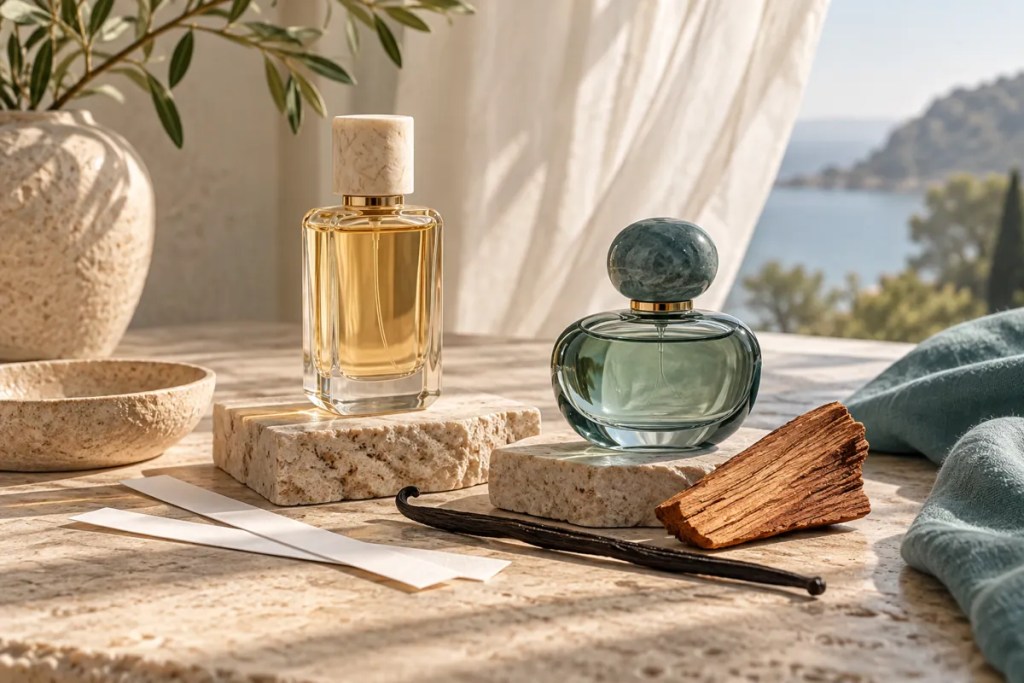
Fragrance layering means wearing more than one scented product together to create an overall effect you enjoy. Start with two familiar scents, compare them separately, then try a restrained combination using each product as directed. A combination is successful because you like it, not because it follows a supposedly universal pairing rule.
Decide what you want to change
Perhaps a bright scent feels too sharp for an evening, or a sweet one feels too dense for daytime. Write a simple aim such as softer, fresher or less sweet. This gives the experiment a direction and helps you avoid adding products until the result becomes difficult to judge.
ELLE's October 2026 fragrance coverage discusses combining scents as part of current seasonal experimentation. That is an editorial conversation, not a guarantee of compatibility or longer wear. You can use your existing collection rather than buying a fragrance advertised specifically as a layering base.
Learn each scent on its own
Try the products separately first. Notice the opening, the impression after it settles and how strong it feels during normal activity. The marketing note list is only a description: two fragrances both mentioning vanilla can still smell very different together.
Keep a few words in a note on your phone. For example: citrus at first, soft wood later, noticeable nearby. These are personal impressions, not laboratory measurements. Avoid deciding that a scent has disappeared solely because you stop noticing it yourself.
A manageable two-scent method
Begin on separate blotters
Use clean paper scent blotters if available and apply each fragrance according to its sampling directions. Smell them separately, then hold them near each other without pressing them to your face. This gives a rough first impression while keeping the bottles and formulas unchanged.
Choose a lead scent
Decide which fragrance should be more noticeable. The second can be a small accent rather than an equal partner. There is no fixed spray ratio that works for all atomizers and concentrations, so begin conservatively rather than treating one spray as a standard measurement.
Try the combination during ordinary wear
Apply only to areas allowed by each label. Keep the rest of your scented routine simple so you can recognise the combination. Wait until the scents settle before adding more, and consider the people who share the space with you.
Three directions to explore
A crisp scent with a soft woody one can be an interesting starting idea if you want more warmth. A gentle floral with a familiar musk may feel more rounded. A sweet scent with a contrasting dry note may create a balance you prefer. These are creative prompts, not reliable formulas: the exact products decide the outcome.
If a combination feels crowded, return to one scent. You do not need a third bottle to fix a pairing you do not enjoy. Try another day with a different accent and compare the result calmly.
Keep application practical
Do not pour fragrances into a shared bottle or mix them into skincare. Wearing two finished products is different from reformulating them. Check warnings, avoid eyes and irritated skin, and follow any restrictions about fabric or hair use.
The FDA's cosmetic-safety advice recommends following labels and using sprays away from flames with ventilation. Stop a product that causes irritation. A beautiful scent does not make discomfort something to ignore.
Frequently asked questions
Does layering make perfume last longer?
Not predictably. The combination may change your impression, but it does not establish a universal wear-time benefit. Judge the experience without continually increasing the amount.
Must the notes match?
No. Shared notes can be a starting point, but contrast may also be enjoyable. You are choosing an effect rather than solving a strict formula.
Can scented body care count as a layer?
Yes, its scent can contribute to the overall impression. Follow its intended use and account for it before adding another fragrance.
Explore the Etoraa beauty collection with your own scent preferences as the guide.
Sources and editorial context
- ELLE: fall 2026 perfume trends — 2026-10-12. Accessed 19 October 2026.
- FDA: Using Cosmetics Safely — Not displayed in retrieved excerpt. Accessed 19 October 2026.