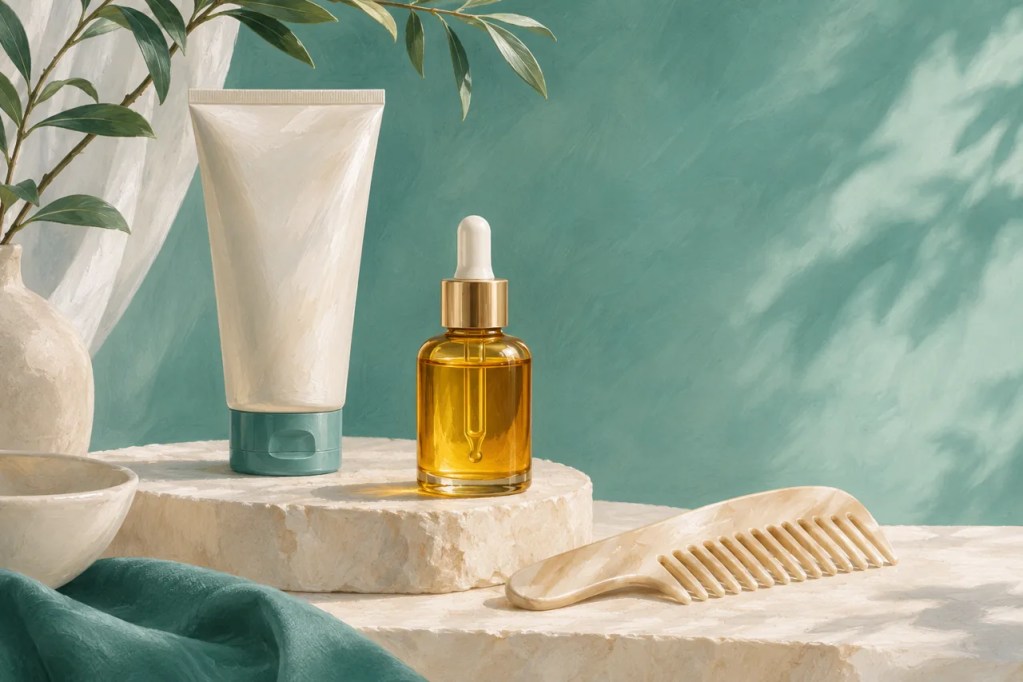
Hair gloss and hair oil can both increase visible shine, but they work in different ways. A gloss is usually a treatment that coats or conditions the hair for a defined period; an oil is generally a leave-in finishing or conditioning product used in a very small amount.
By Etoraa editorial. Reviewed 4 November 2026. General cosmetic and personal-care guidance; no product testing or medical review is claimed. Featured artwork is an AI-generated editorial illustration.
What “hair gloss” can mean
The term may describe an at-home clear or tinted rinse-out treatment, a conditioning mask marketed for shine, or a professional colour service. Read the exact label. A tinted gloss can subtly affect tone; a clear gloss aims mainly at surface smoothness and reflection. Processing time, compatibility and aftercare differ.
Fall 2026 hair coverage continues to favour polished, healthy-looking finishes. That style signal does not mean every hair type needs a gloss or that gloss repairs internal damage.
What hair oil does
A cosmetic hair oil is commonly applied to damp or dry lengths to reduce a rough feel, add slip, tame flyaways or create shine. Some formulas are mostly silicones with oils; others are oil-heavy. The label and texture matter more than the product name.
Start with the amount and placement on the label. Hair density, texture and the complete formula can affect how heavy the finish feels; no drop count suits every oil. Keep oil away from the scalp unless the product is specifically intended there.

Choose by the problem you want to solve
- Dull finish after washing: a rinse-out gloss may suit an occasional routine.
- Dry-feeling ends between washes: a tiny amount of oil may be more convenient.
- Unwanted colour tone: only a compatible tinted gloss addresses tone; seek professional advice for colour corrections.
- Heat damage or breakage: neither product reverses damage. Reduce heat and handle hair gently.
- Scalp symptoms: gloss and oil are not treatments for persistent itching, scaling or hair loss.

A cautious at-home gloss routine
Follow the formula’s directions, including gloves, timing and strand or allergy testing where stated. Apply evenly to the indicated hair condition—some products specify shampooed damp hair, others dry hair. Rinse completely and avoid extending the processing time to chase a stronger result.
A lighter oil technique
- Check whether the label specifies damp or dry lengths.
- Use the labelled amount; avoid adding extra layers immediately.
- Spread it between your palms if the directions suggest this.
- Press over the ends before smoothing the mid-lengths.
- Wait, then add more only if needed.
The American Academy of Dermatology recommends limiting excessive heat and using low or medium settings. Shine products may improve appearance, but gentle drying and reduced heat exposure remain more important for limiting damage.
Can you use both?
Yes, if each has a separate job: an occasional rinse-out gloss and a minimal amount of oil for finishing. Using more layers does not guarantee more shine; it may simply create buildup. Clarify according to your hair and product directions rather than on a rigid schedule.
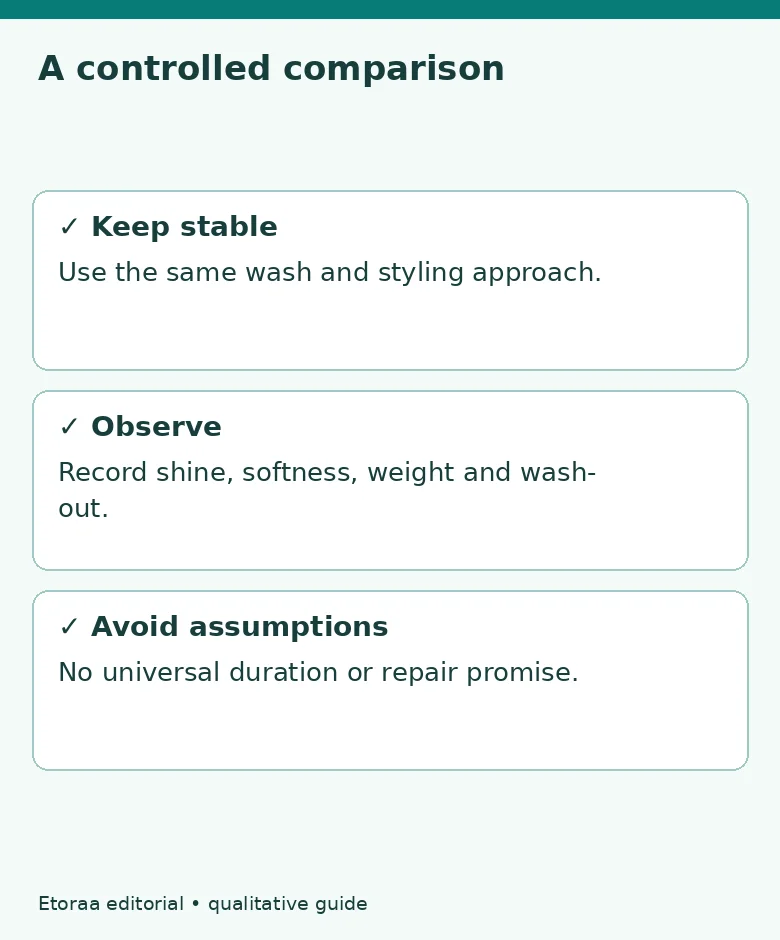
Before combining them, try each separately and note softness, shine, weight and wash-out. This small comparison makes it easier to identify which product contributes to a pleasing finish or unwanted heaviness. It also helps prevent a one-time good result from becoming an unnecessarily crowded routine.
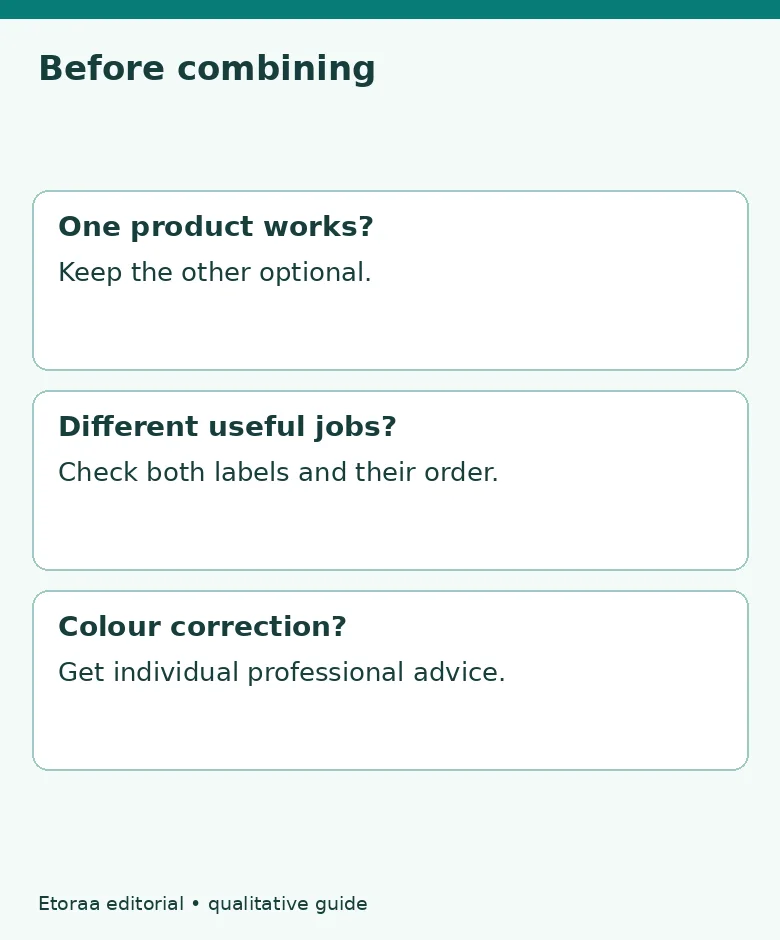
A hair gloss versus hair oil worksheet
Before buying, write two separate goals: the appearance you want and the feel you want. Then read whether the gloss changes tone, rinses out or has a processing step. Check the oil’s placement and amount independently.
A clear product name does not replace colour or compatibility instructions. Try one suitable change while keeping your wash and styling approach familiar. Note shine, softness, weight and how easily the product washes out.
This cannot establish lasting repair or a universal duration. The AAD’s healthy-hair guidance keeps conditioning and reduced heat central. Our heat-protectant guide explains why shine and heat protection are separate label questions.
FAQs
Is a gloss the same as hair dye?
Not always. Some glosses are clear, some deposit tone and salon gloss services vary. Read the service or product description.
Does hair oil moisturise hair?
It can reduce rough feel and help seal the surface, but results depend on the full formula and your hair.
Where can I compare hair-care formats?
Sources
- Vogue — Fall 2026 hair trends — 2026-10-12; accessed 21 October 2026.
- AAD — Tips for healthy hair — 2024-08-12; accessed 21 October 2026.
Sources checked for this update
- AAD: Tips for healthy hair — updated 12 August 2024; accessed 4 November 2026.