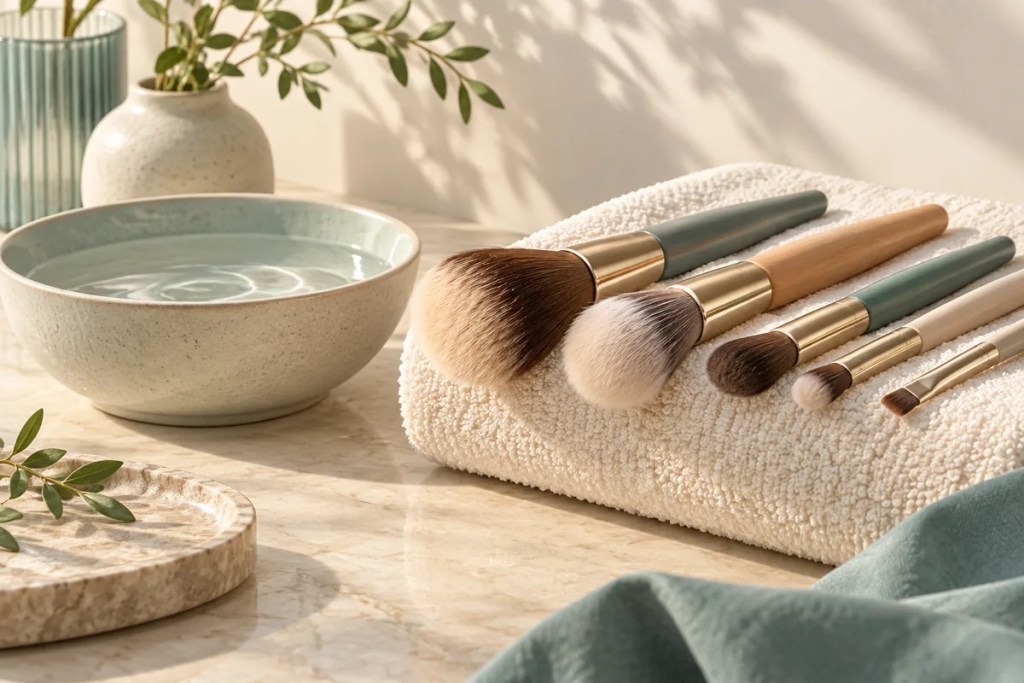
To clean makeup brushes, wash the bristles gently, rinse away residue and dry them flat with the tips over an edge. Allow enough time for them to dry fully before reuse. A routine that fits your week is easier to maintain than an elaborate cleaning session you keep postponing.
Brush care is a useful place to focus before buying another palette or tool set. It also gives you a chance to notice which brushes you actually use, which need replacing and which are taking up space.
How often should you clean makeup brushes?
The American Academy of Dermatology recommends washing makeup brushes every seven to ten days. Follow any additional care instructions for your specific tools. Do not share personal makeup brushes.
Pick a repeatable time when you will not need the brushes immediately afterwards. A short calendar reminder can help, but keep the setup simple: clean water, a suitable gentle cleanser, a clean towel and enough drying space.
Clean the bristles without soaking the handle
The AAD method uses lukewarm water and gentle or clarifying shampoo. Rinse the tips first, gently work cleanser through them and rinse until the water runs clear. Keep the handle and attachment area out of a soaking bath. Squeeze excess moisture with a clean paper towel, then lay the brushes flat with the tips extending over a counter edge.
That summary is a starting point; read the linked professional guidance and the brush maker’s instructions before cleaning a specialised tool. Avoid improvising a harsh solvent mixture or assuming a household disinfectant is suitable for every bristle material.
Make drying part of the routine
Choose a clean, protected space
Allow room between brushes so they are not piled together. Keep them where they will not fall, be splashed or be handled by children or pets. Put the towel somewhere you can leave it undisturbed rather than balancing it at a busy sink.
Do not rush back to the makeup bag
Plan around drying time rather than assuming a brush is ready because its surface feels less wet. If you need makeup while the set is drying, use an appropriate clean alternative you already own. You do not need a duplicate of every brush just to maintain a routine.
Store only once dry
A clean container or pouch is part of the setup. Empty loose powder and residue from your storage area according to its care instructions. Returning clean tools to a dirty bag makes the habit harder to manage.
Separate cleaning from a collection audit
While the brushes dry, group them by actual use: complexion, cheeks and eyes. Set aside damaged tools with loose handles, rough edges or bristles that no longer work as intended. Cleaning does not repair broken construction.
For example, if you use five brushes and own twenty, keep the five easy to find. Store occasional tools separately and clean them before bringing them back into regular use. Organisation can make the weekly habit shorter without turning it into another shopping task.
Common shortcuts to reconsider
- A quick colour change on a dry pad should not automatically be treated as a full wash.
- A fragranced spray is not proof that a brush is clean.
- A wet handle should not sit upright with moisture running into its attachment area.
- A tool that still feels uncomfortable after cleaning may need replacing.
Do not use a shared makeup tester brush as if it were your personal tool. If a cosmetic or tool appears to cause persistent irritation, stop using it and seek appropriate professional advice.
Frequently asked questions
Can I soak the entire brush overnight?
That is not the AAD method. Prolonged soaking can affect the attachment between bristles and handle. Check the maker’s instructions for your tool.
Do sponges use exactly the same cleaning method?
Not necessarily. Follow the sponge manufacturer’s directions and let it dry appropriately. This guide focuses on brushes, not every cosmetic applicator.
Should I buy a cleaning machine?
It is optional. First establish a simple routine and check whether any device is compatible with your brushes. Convenience claims do not replace care instructions.
Use our eyeshadow comparison to think about how product formats affect your tool needs. Explore the Etoraa beauty collection only after identifying a useful gap.
Sources and editorial note
AAD brush-cleaning guidance linked above; update date not displayed in the retrieved page. Accessed 22 October 2026. The cleaning summary follows professional guidance; the organisation suggestions are editorial ideas, not a tool performance test.