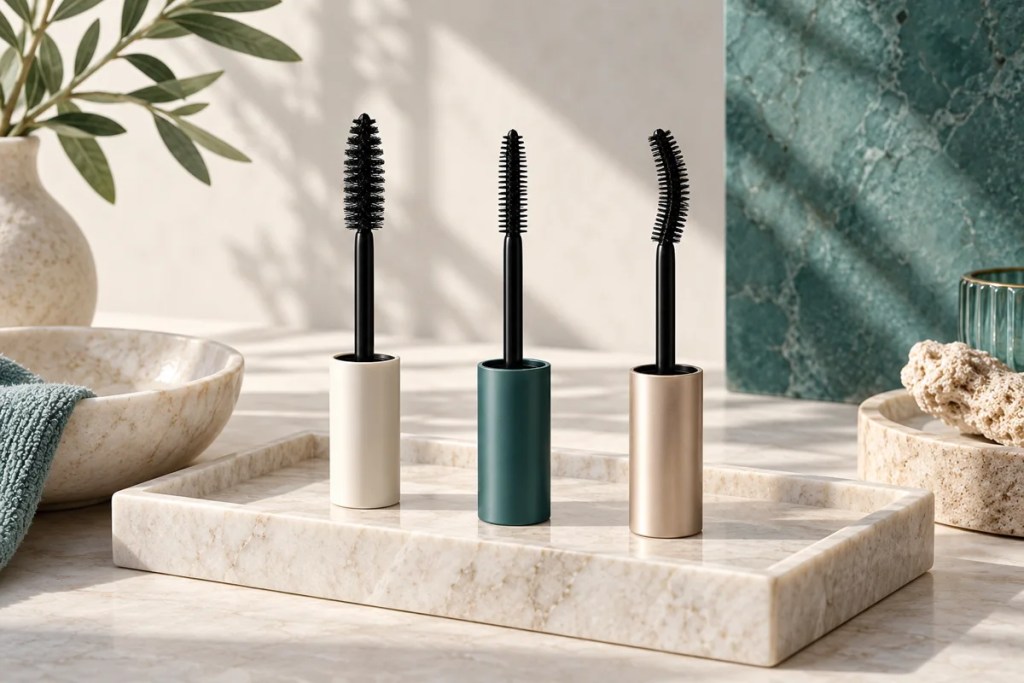
Mascara wand types can help you compare application, but the brush does not work alone. Formula texture, the tube’s opening and how much product you apply also influence the result. Start with a size you can control, then consider the shape. A dramatic brush design is not a guarantee of longer or fuller-looking lashes.
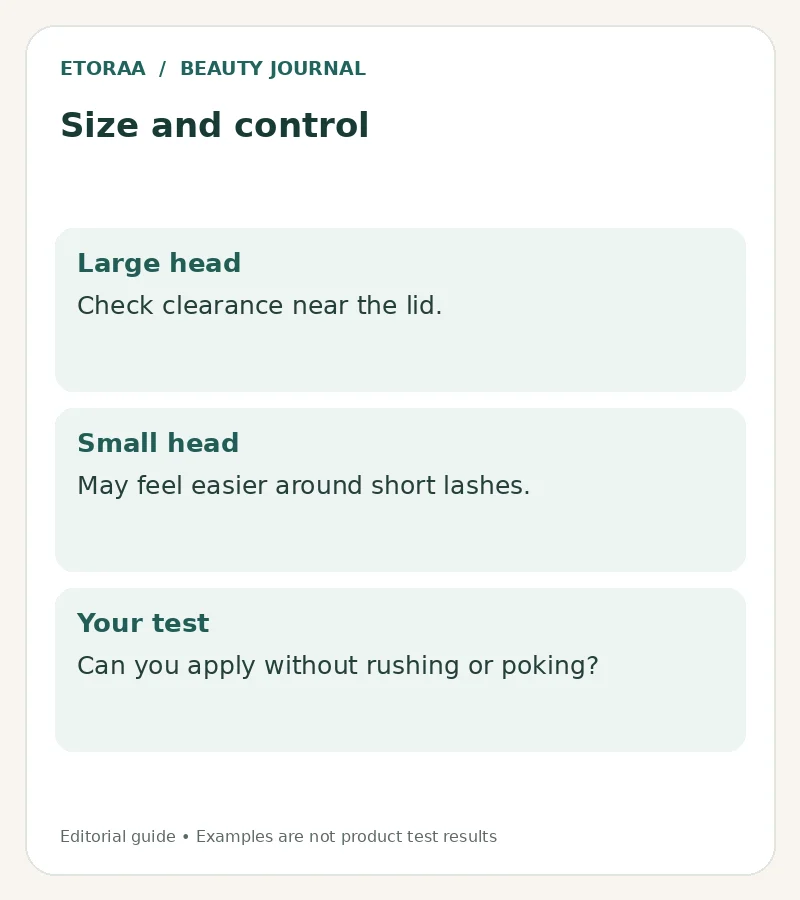
Mascara wand types: start with size and access
A large fluffy brush can carry plenty of product, but may feel awkward near short lashes. A slimmer brush can make a small area easier to reach. These are practical handling differences, not fixed rules for every eye shape. Compare the actual brush head rather than relying only on the promotional name.
If you often mark your lid, try a smaller or easier-to-control applicator before changing the rest of your eye makeup. Use a mirror and a stable position. Do not rush mascara application in a moving vehicle. The best brush for your routine is one you can use steadily and remove from the eye area without snagging.
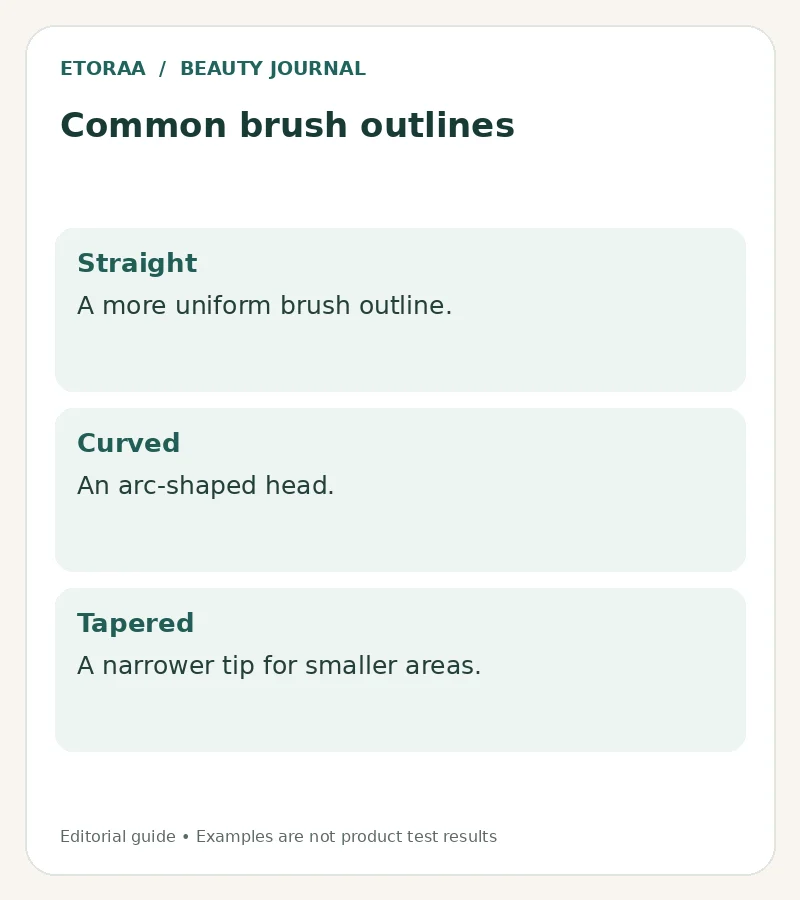
Understand the main shapes without treating them as promises
Curved brushes follow an arc; tapered brushes narrow toward a tip; straight brushes have a more uniform outline. Molded bristles and traditional fibre brushes also feel different in use. Brands may pair these designs with length, volume or separation claims, but the complete product determines how the mascara behaves.
For instance, two curved wands can have different diameters, bristle spacing and formulas. One may feel manageable while another deposits more than you want. Avoid choosing only because a shape is trending. Look for clear product instructions and an application style that matches the amount of time you have.
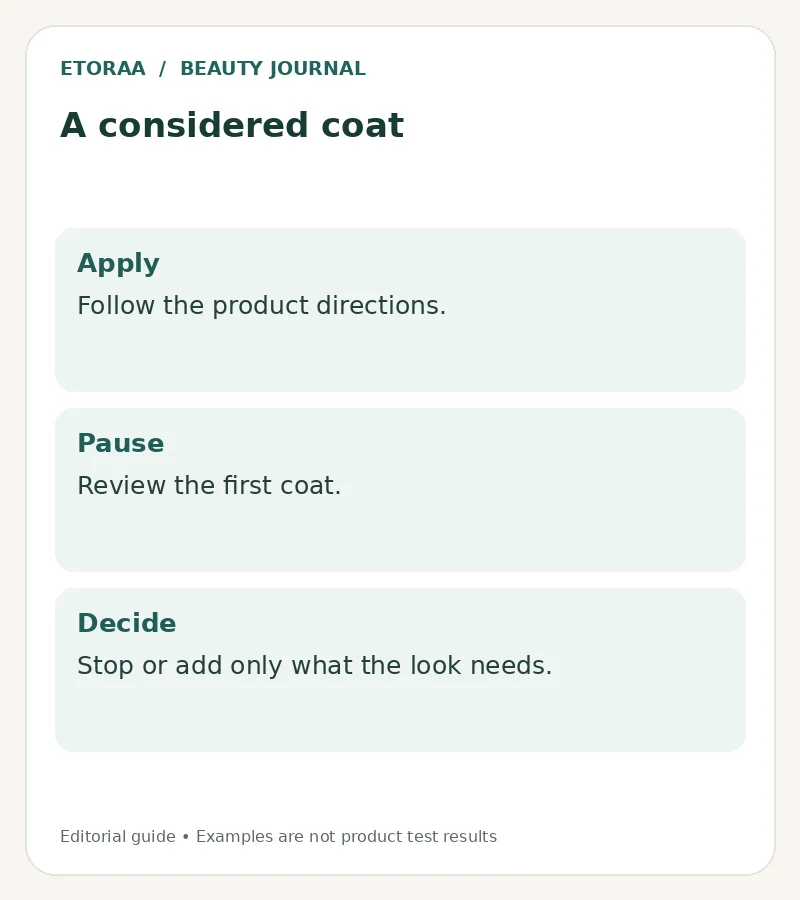
Use a lighter first coat to learn the product
Follow the maker’s directions and begin with a controlled coat. Check the result before adding another. If you want to reach small outer or lower lashes, use a position you can maintain without poking the eye. There is no need to coat every lash heavily to achieve a tidy everyday look.
When the first coat already looks full enough, stop. Repeated layering can create an effect you did not intend and make removal harder. If the mascara becomes dry or behaves differently, do not add water or saliva. Check its use period and condition instead of trying to restore the formula yourself.
Choose a complete application and removal routine
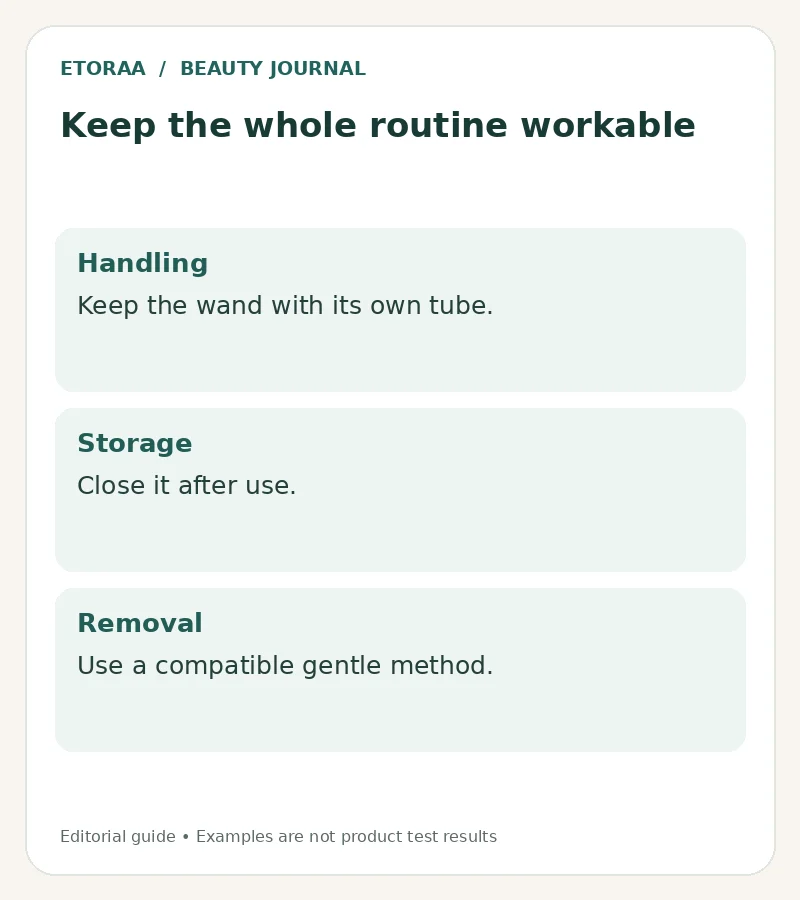
Keep the wand with its own tube rather than swapping a brush between formulas. Close the container after use. Do not share eye makeup. The FDA’s guidance emphasizes clean handling and avoiding use when irritation occurs. That matters more than choosing a fashionable brush shape.
As a practical comparison, think about a short morning routine versus an event look. For the morning, a slim familiar wand and one light coat may be enough. For the event, you can practice another formula beforehand and check its removal method. Evaluate comfort, visible finish and ease of removal together, rather than judging only the first mirror impression.
Common questions
Does a curved wand guarantee curl?
No. Shape is one part of the complete product, and results vary with formula and application.
Can I add water to dry mascara?
No. Follow the product’s condition and use-period guidance instead of changing its formula.
Build your next step
For a related practical guide, read Burgundy Mascara: A Subtle Colour Switch for Everyday Makeup. Explore Etoraa when you are ready to compare available beauty and self-care products. Check each listing for its actual ingredients, dimensions and care directions.
Add the removal method to your shortlist
Write the formula name beside the brush shape when comparing mascaras. Two wands that look similar may belong to products with different application and removal instructions. A useful shortlist includes a brush you can control and an evening method you can follow. Avoid changing several variables at once when judging your own routine: keep the rest of the eye look familiar and note a specific handling problem.
| Situation | Practical check |
|---|---|
| Application | Can you reach the intended lashes without repeatedly touching the lid? |
| Formula | Does the product description match the finish you want? |
| Removal | Do you have the instructions and suitable method ready? |
Some tubing formulas use warm water; others specify remover. Our formula-specific removal guide explains that distinction with manufacturer examples.
Sources and editorial context
Clarins: mascara brush formats · PAC Cosmetics: wand shapes · Blush & Beyond: a first-person comparison, not Etoraa testing · FDA: eye cosmetic safety
Prepared by Etoraa editorial. This guide explains shopping and routine choices using the sources above and original illustrative examples. It does not claim hands-on product testing or clinical review. Sources checked on 27 October 2026. The featured image is an illustrative composition, not a photograph documenting a product test.