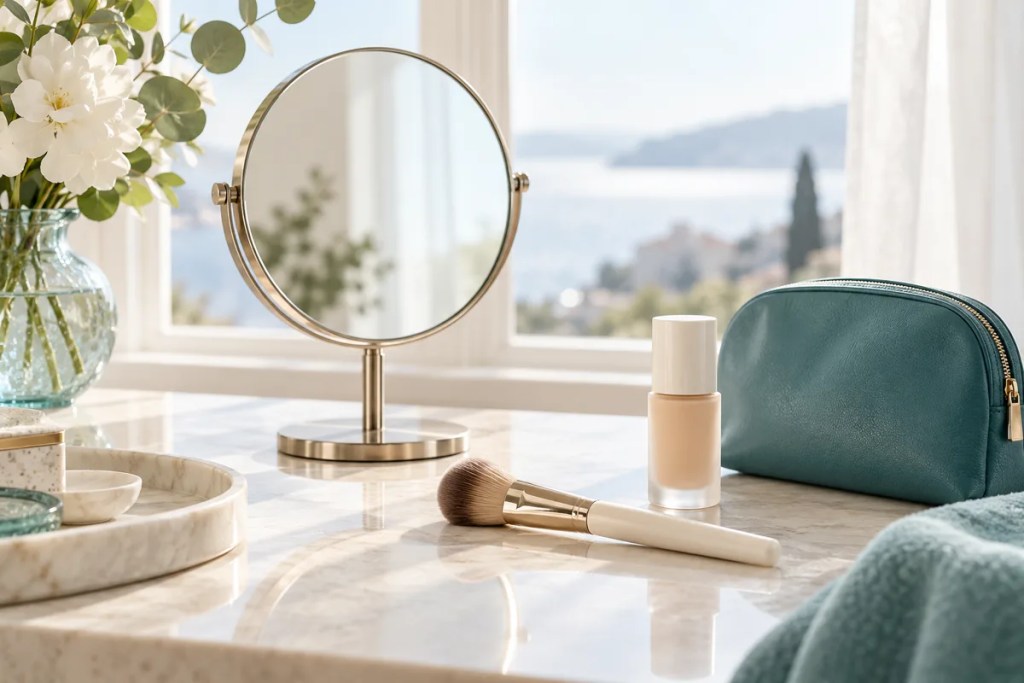
Good makeup lighting starts with an even, comfortable view of your face. Face a soft light source, reduce strong shadows and check your finished makeup in another everyday setting. Before changing foundation or adding concealer, move the mirror: sometimes the patch you are correcting is a shadow.
Etoraa editorial guide, 28 October 2026. This is a practical setup framework, not a lighting-equipment test or a promise of identical colour in every room. Images are original illustrations.
Start with position, not a new purchase
Try sitting with your face towards a window and your mirror between you and the window. Choose comfortable indirect light rather than direct sun. Then look at both cheeks, the jaw and the area beneath your eyes. If one side is much darker, adjust your seat or mirror before judging the makeup.
Philips Hue’s makeup-lighting guide recommends front-facing light and explains why side or back lighting can create an uneven view. Its advice comes from a lighting manufacturer with products to sell; you can try the positioning principle with your existing setup.

For example, if one cheek looks more heavily coloured, turn towards the light before removing blush. If the difference disappears, you have learned something about the setup without changing your face. If it remains, blend a small area and check again.
Separate brightness, colour and colour rendering
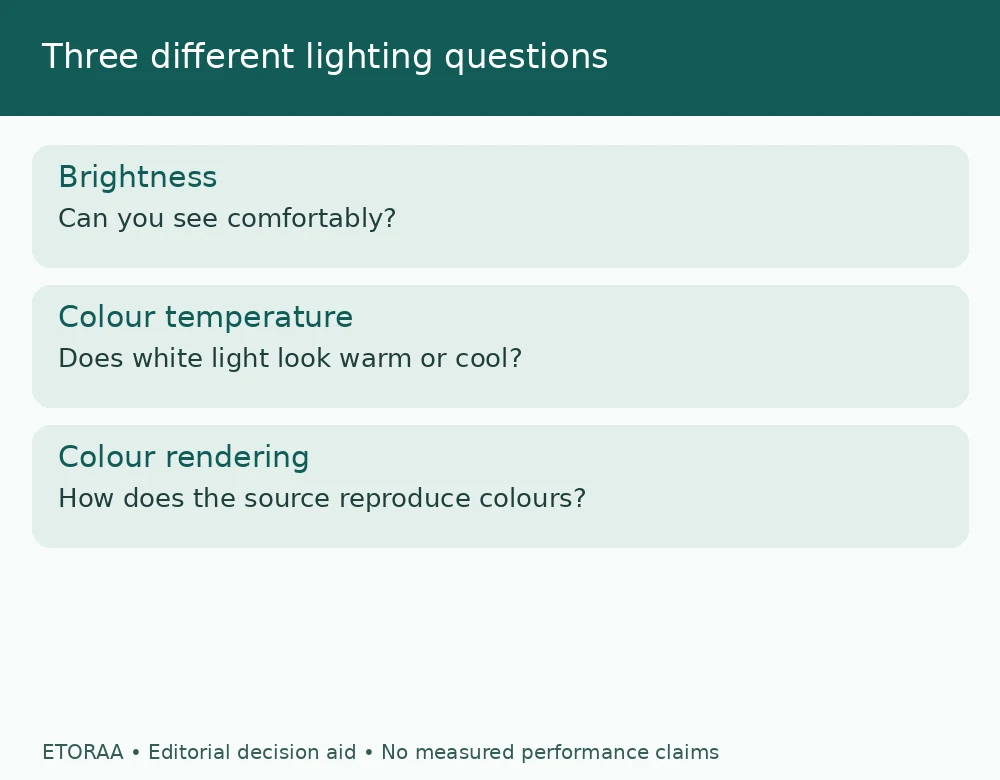
These are different questions. Brightness concerns how much light you have. Colour temperature describes whether white light looks warmer or cooler and is expressed in kelvin. Colour rendering concerns how a source shows colours relative to a reference. A lamp can be bright without making it easy to judge a shade.
Philips Hue discusses colour temperature and higher colour rendering in its guide. However, there is no single setting that guarantees your makeup will look identical outdoors, at work and at dinner. Avoid treating a label such as daylight as a complete specification.
When comparing equipment, write down what the listing actually discloses. Does it give colour settings, adjustable brightness and a colour-rendering specification? An omitted specification is unknown. It does not prove poor performance, and a flattering photograph does not prove accurate colour.
Run a small makeup lighting check
Use the same familiar makeup for this check. Keep the amount and tools unchanged, then compare the result in two places where you normally spend time. This is a personal observation, not a controlled product test.
- First, inspect the blend in your normal mirror.
- Next, check near a window with comfortable indirect light.
- Finally, look in the indoor lighting relevant to your plans.
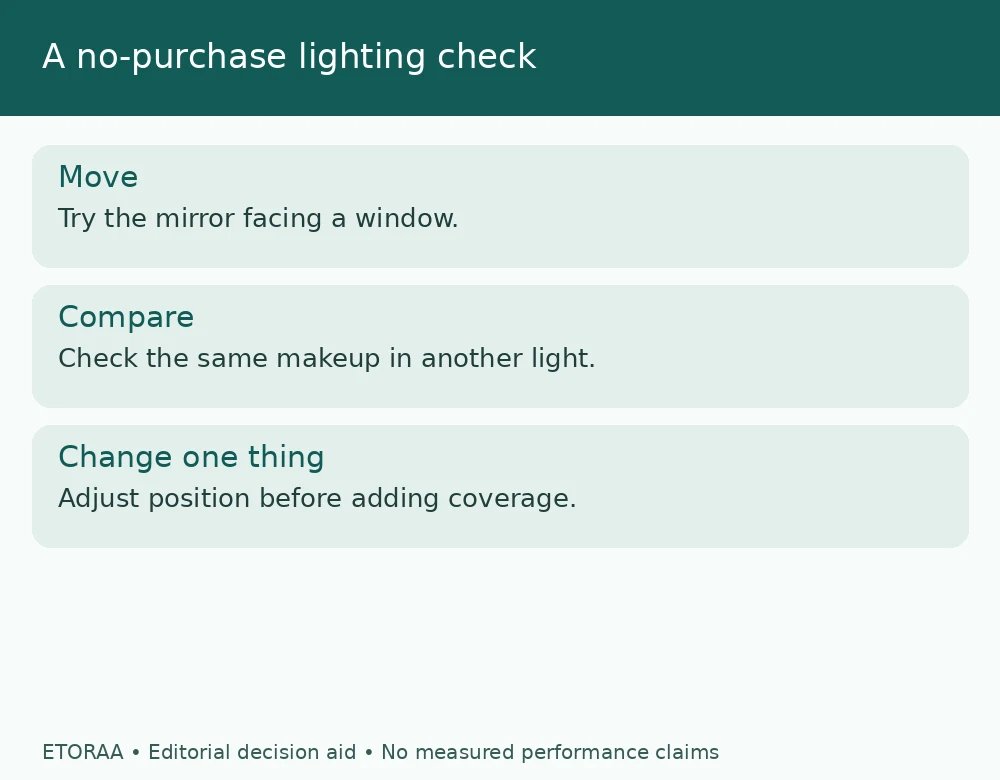
Note a specific issue, such as a visible jaw edge or one unblended patch. Avoid judging every pore in a magnifying mirror. A close detail view and a normal conversation-distance view answer different questions. Step back before deciding you need more coverage.
If colour still seems wrong across settings, review your shade and formula. Our skin tint and foundation comparison helps separate coverage preferences from the lighting problem. A different lamp cannot make an unsuitable shade universally suitable.
Make a useful shopping checklist
If repositioning is not enough, identify the missing function before buying a lighted mirror. You might need light available before sunrise, a stable mirror at a comfortable height or brightness control in a shared room. Those needs call for different solutions.

Check dimensions, viewing distance, power requirements and the controls you will actually use. Follow the equipment maker’s placement and electrical-safety instructions, especially near water. A cosmetic guide is not an installation guide. For fitted electrical work, use an appropriately qualified professional.
Keep your decision small: choose a setup that helps you see, rather than a bundle of features you cannot evaluate. You can browse Etoraa’s beauty collection when you have a clear cosmetic need; this guide does not establish that Etoraa sells or has tested any particular lighting equipment.
Makeup lighting FAQs
Is natural light always best?
It can be a useful check, but its direction and appearance change. A window beside you at one hour may give a different view later. Consistency and comfort matter alongside the source.
Do I need a ring light?
No. Start by checking what your current mirror and available light let you see. Buy equipment to solve an observed problem, rather than assuming a particular shape guarantees a better result.
Should I copy a specific kelvin recommendation?
Treat it as a starting point, then check your actual setting. The reviewed guides give different preferred ranges. Adjustable settings can help you compare, but the number alone does not describe brightness or colour rendering.
Sources and editorial limits
Primary lighting guidance: Philips Hue, 18 August 2026, accessed 28 October 2026. The setup exercise and purchase checklist are Etoraa editorial decision aids. No instruments, wear trials or measured improvements were used.