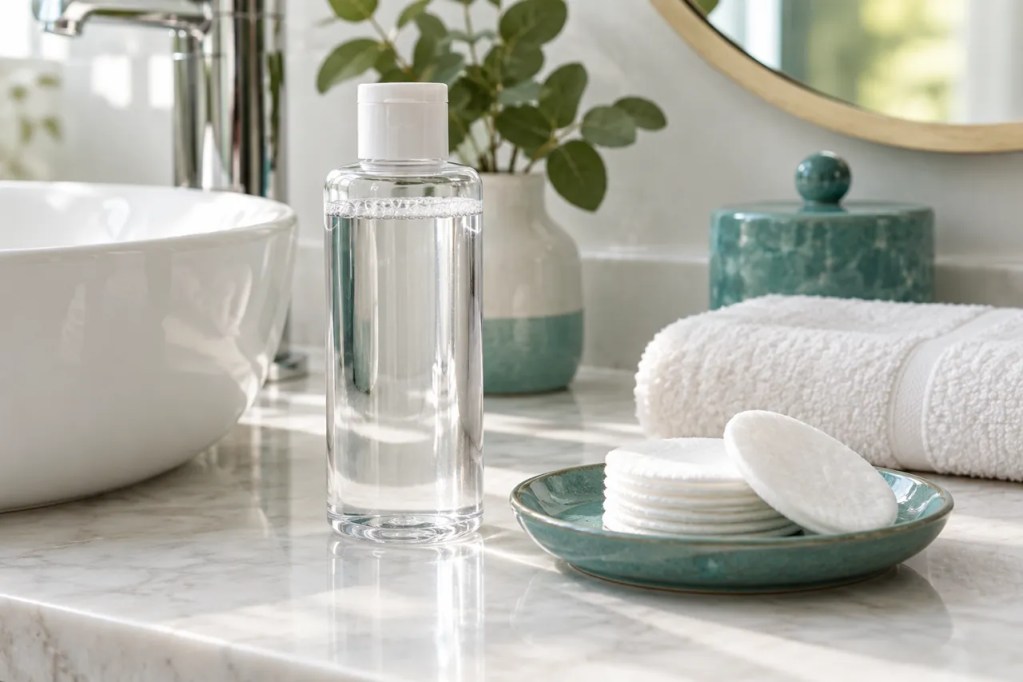
Micellar water does not always need rinsing: follow the instructions on your exact bottle. A no-rinse formula can stay on if it cleans adequately and feels comfortable. However, stinging, a persistent film or makeup left behind calls for a different next step.
By Etoraa editorial. This is a source-based cleansing guide, not a product test or a medical review.
Start with the bottle, not a universal rule
Micellar water is a cleanser. It uses cleansing agents that help lift oily material from the skin. The word “water” does not mean plain water, and the category includes different formulas. Cleveland Clinic explains its cleansing role and notes that heavier makeup can need another removal method. Read its clinician-informed explanation.
For a concrete label example, Bioderma’s Saudi Sensibio H2O page instructs users to apply it with a soaked pad, cleanse gently and leave it without rinsing. That direction belongs to that product. Check your own local pack rather than transferring instructions between brands or similarly named versions. See the manufacturer’s directions.

Separate comfort from cleaning performance
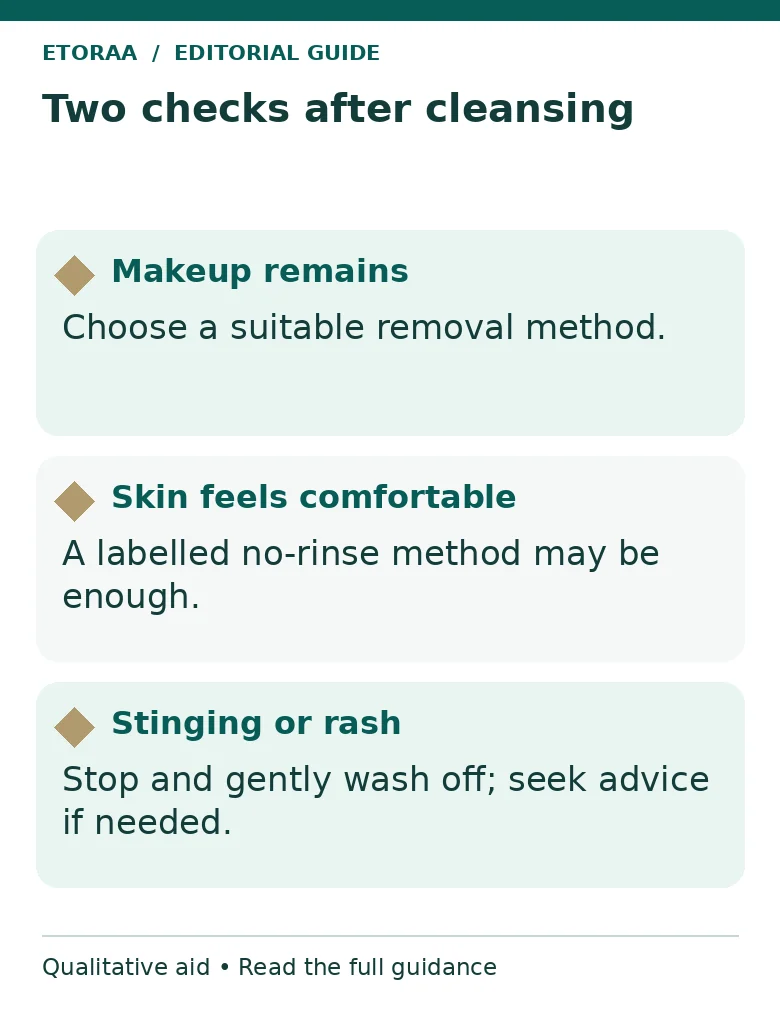
Ask two questions after use. First, has the makeup you intended to remove actually come away? Next, does your skin feel comfortable? These questions can lead to different decisions.
For example, a light makeup day may need little removal. Waterproof mascara may need a remover whose label specifically covers that use. Repeatedly rubbing harder with a dry pad is not a useful substitute for the right removal directions. Keep cleanser out of your eyes unless the label permits use around them, and follow its eye-area precautions.
If product stings or causes a rash, stop using it and gently wash it off. Persistent or significant symptoms need professional advice. Rinsing is not a way to make an unsuitable product suitable. Our small product-trial guide explains why a home trial cannot guarantee future tolerance.
Choose the smallest routine that does the job
You do not need to add a second cleanser solely because a routine online has two steps. Equally, a no-rinse claim does not promise removal of every cosmetic you own. Read the removal instructions for both the cleanser and any difficult makeup.
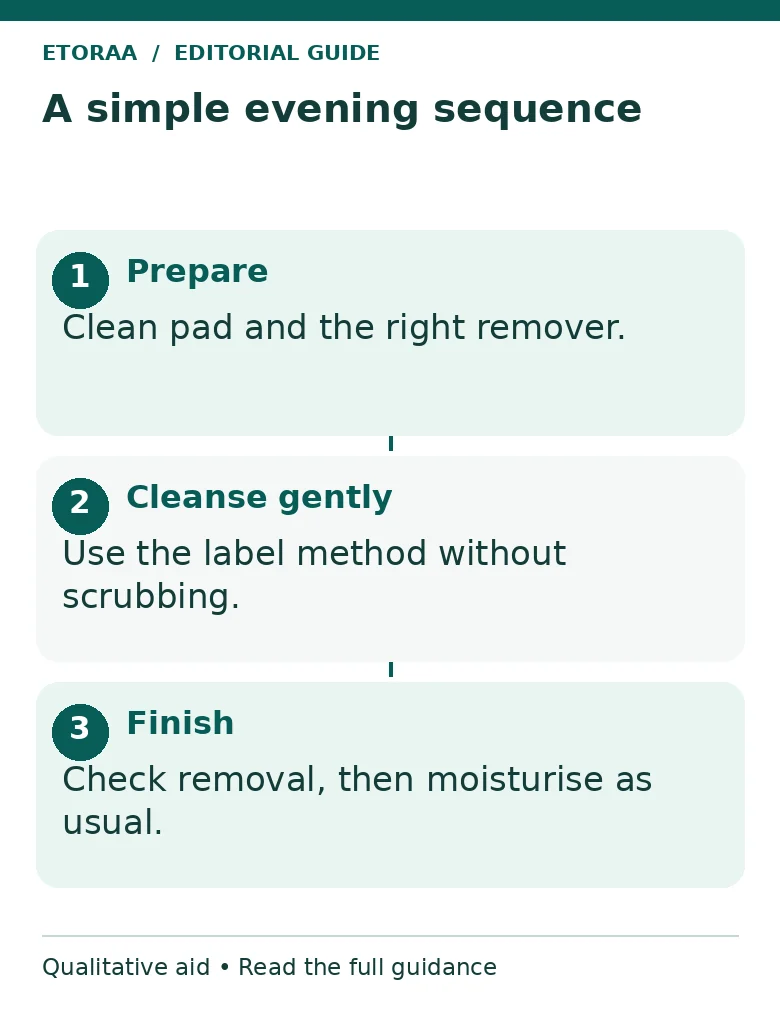
Try this practical evening plan: gather a clean pad, the chosen cleanser and a towel before starting. Use gentle passes with enough product for the label’s method. Then check the result in normal light. If removal is incomplete, use an appropriate gentle wash-off cleanser or the cosmetic maker’s recommended remover. Finish with your usual suitable moisturiser.
Our double-cleansing guide covers when a separate first cleanse may be useful. It is a choice based on what you are removing, not an obligation to buy two products.
Make the pad part of the decision
A rough, dirty or nearly dry pad can make cleansing less comfortable. Use a fresh, soft pad and avoid pressing harder to compensate for too little liquid. If you use reusable pads, follow their own washing instructions and let them dry fully before clean storage.
When you assess a new routine, change one thing at a time. Record the exact cleanser, makeup worn, removal method and how skin felt afterwards. A short note such as “mascara still visible; needed a different remover” is more useful than calling the entire category ineffective.

Frequently asked questions
Is micellar water a toner?
Its main role is cleansing. A toner is a separate product category, so do not assume the two are interchangeable because both look watery.
Can I rinse a no-rinse formula?
You can choose a gentle water rinse if the product’s instructions allow it and that feels better. However, avoid adding prolonged scrubbing or repeated hot-water washing.
Does a clean-looking pad prove all sunscreen is removed?
No. Clear products are difficult to assess visually. Use suitable cleansing directions rather than treating pad colour as a laboratory test.
Sources and scope
Accessed 30 October 2026: Cleveland Clinic, updated 7 August 2026; Bioderma Sensibio H2O product directions, no update date displayed. This is supporting evergreen guidance. The featured image is an AI-generated illustration; body graphics are qualitative editorial aids, not evidence of product performance.