
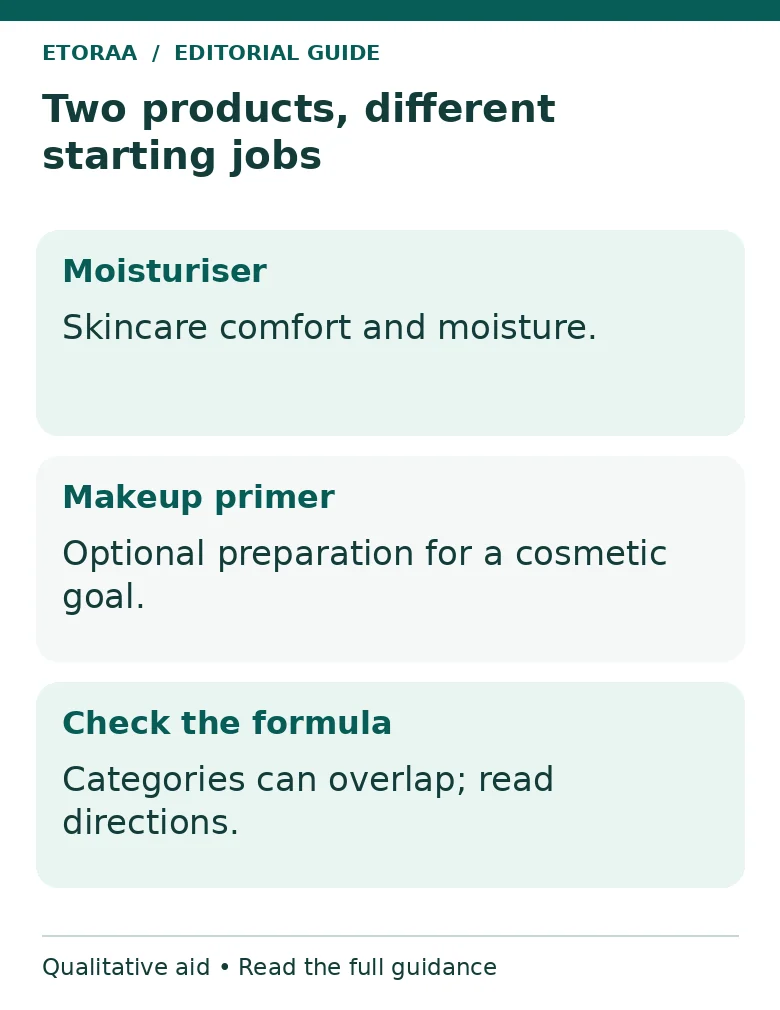
Moisturiser supports a comfortable skincare base; makeup primer is an optional preparation product for a particular makeup finish or wear concern. One does not automatically replace the other. Start with skincare that suits you, then add primer only if it solves a specific problem you notice.
By Etoraa editorial. This is a source-based comparison, not a wear test or a claim that everyone needs another layer.
Give each product a clear job
Some makeup primers aim to make skin look smoother. Others emphasise a matte finish, glow or grip. Meanwhile, moisturisers vary from light lotions to rich creams. Marketing categories overlap, so read the exact formula’s purpose and directions instead of judging by a bottle’s size.
L’Oréal Paris and its Makeup.com publication describe moisturiser as the skincare step before primer. Curology’s guide also treats primer as a makeup choice rather than a universal requirement. Read L’Oréal’s application guide and Curology’s moisturising-under-makeup guide.
Start with the routine that already works
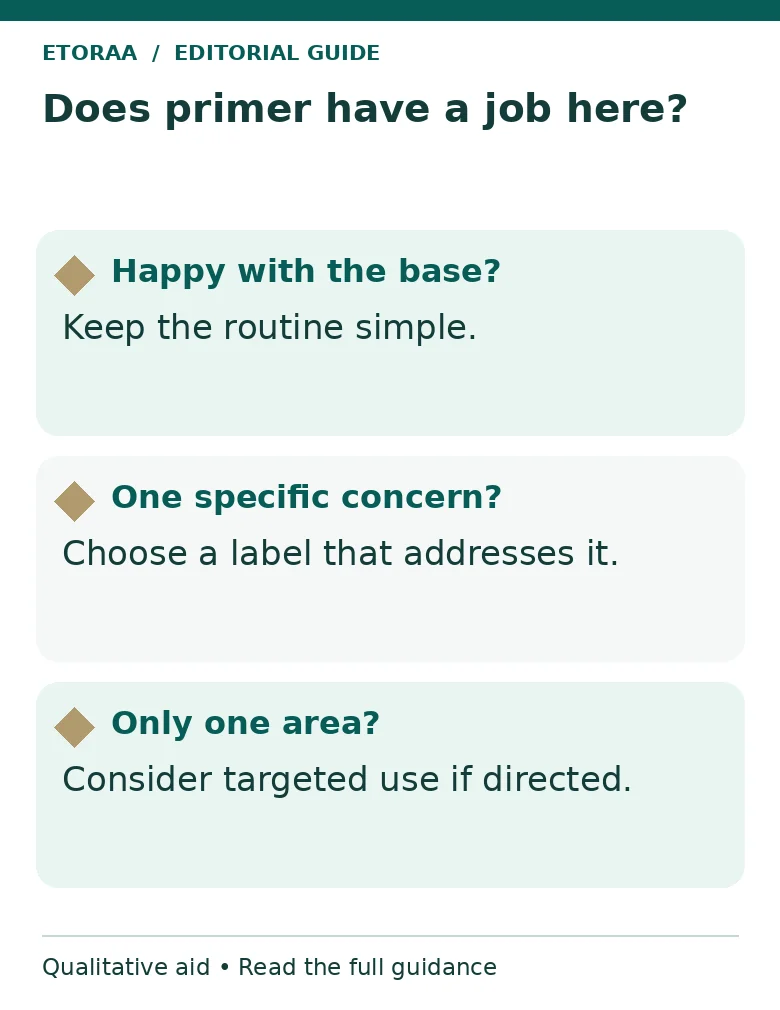
Before buying makeup primer, identify the actual concern. Is foundation difficult to spread, too shiny in one area, or simply a finish you do not like? A primer label should address that goal. Buying a “perfecting” product without a clear task makes it harder to judge whether it helps.
For example, someone happy with their foundation’s finish may gain little from adding a separate primer. Another person may prefer a small amount on the centre of the face rather than applying it everywhere. Those are practical choices, not rules tied to a skin-type label.
Keep the routine familiar while trying the extra step. If you change cleanser, moisturiser, foundation and primer together, you lose a useful comparison. Our skincare-under-makeup guide covers wider problems such as pilling and uneven application.
Keep sunscreen instructions intact
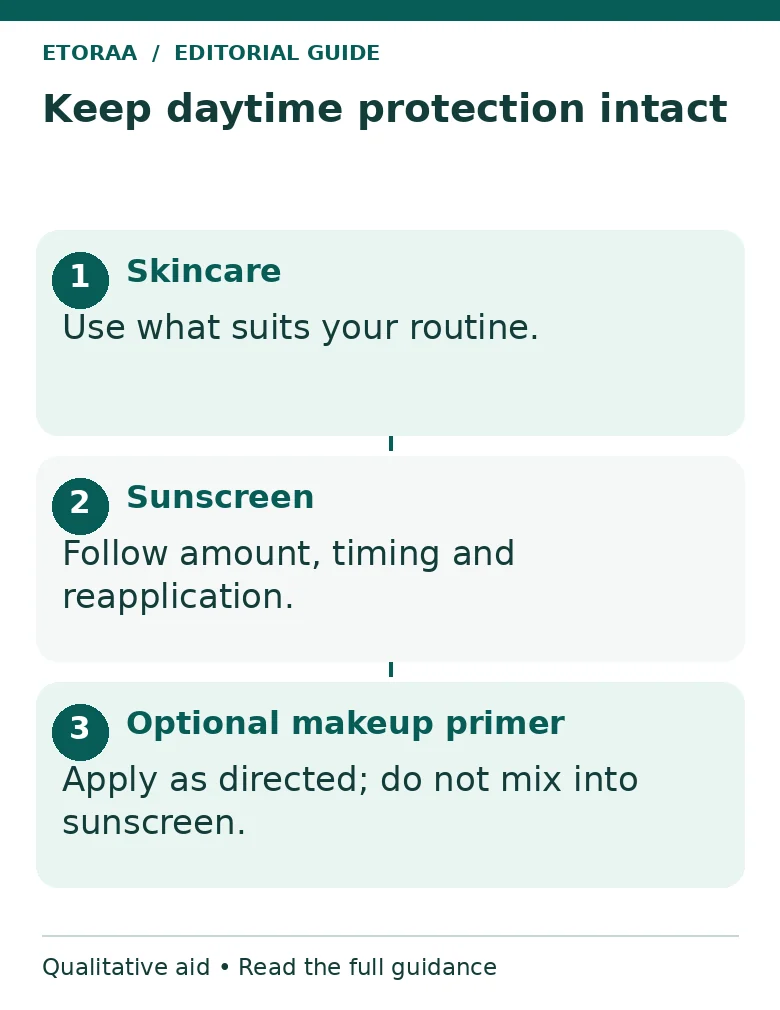
When your daytime routine includes sunscreen, follow its own amount, timing and reapplication directions. Do not reduce it to make room for primer. The AAD sunscreen guide emphasises correct application and reapplication. Also, do not mix primer into sunscreen in your hand to save a step. A cosmetic finish is not a reason to improvise with sun-protection directions.
Allow each layer to settle according to the product instructions before adding the next one. There is no single waiting time that fits every moisturiser, sunscreen and primer. A useful observation is whether you can apply foundation without dragging the previous layer into rolls.
Read SPF claims carefully. A makeup primer that includes SPF still has its own application requirements; a tiny dab used for a cosmetic effect should not be assumed to provide the labelled protection. Our sunscreen-over-makeup guide discusses the separate reapplication question.
Try an ordinary-day comparison
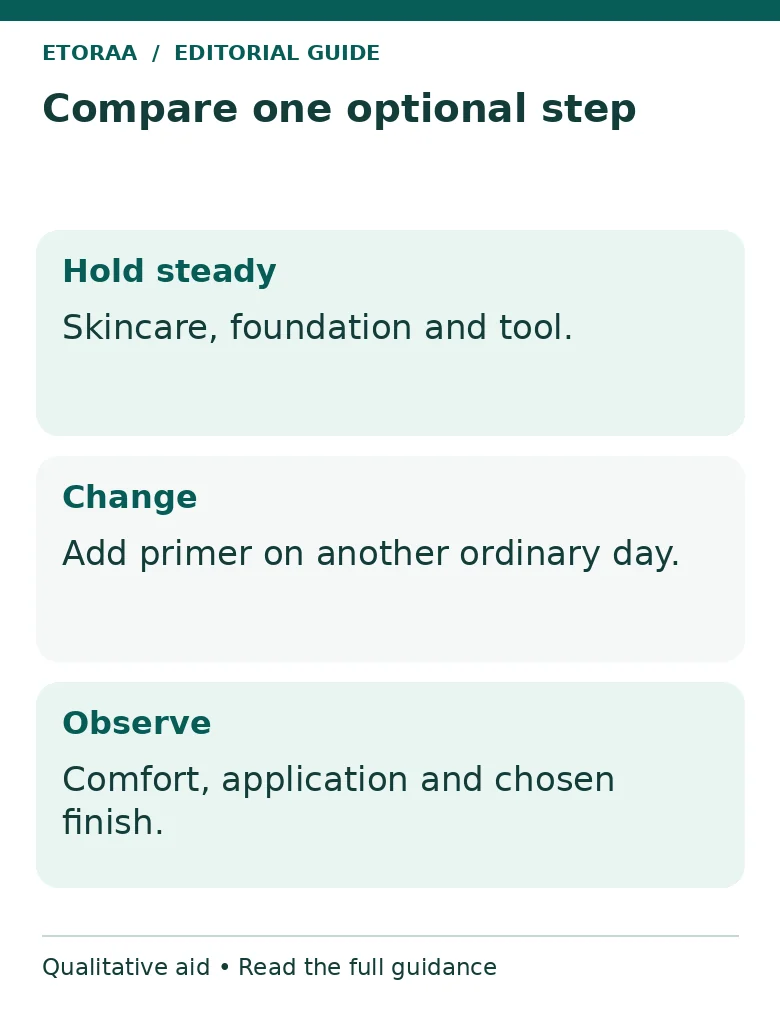
Use the same familiar skincare, foundation and application tool on two ordinary days. On the first, leave out the optional primer. On the next, apply it as directed while keeping the rest steady. Write down your chosen goal before looking at the result.
Record comfort, ease of spreading, visible finish and what you noticed later. For instance, “liked the less shiny centre, but the cheeks felt heavy” gives you a reason to try targeted application. “It lasted all day” is less useful unless you explain what stayed acceptable and under what conditions.
This is a personal routine comparison, not a controlled scientific test. Different weather, activity or application amounts can affect what you see. Avoid turning one good day into a guarantee for other people.
Know when to simplify
If an extra layer makes makeup harder to apply, remove that optional step before buying another product to fix it. Check that you followed the directions and did not use more than intended. Persistent irritation calls for stopping the troublesome product, not finding a stronger primer.
Likewise, ingredient lists alone cannot guarantee two finished formulas will work together. “Water-based with water-based” is too simple to settle every pairing. Test the actual products using their directions and keep the result specific to that combination.
Frequently asked questions
Can moisturiser act as my makeup preparation?
Yes, you may be happy with suitable moisturiser and your usual daytime protection before foundation. A separate makeup primer is optional.
Should I prime bare skin to avoid layers?
Do not drop skincare or sun protection you need solely to fit in primer. Choose a simpler makeup routine if the extra layer does not work for you.
Does every primer hide pores?
No. Check the intended cosmetic effect. A temporary smoother appearance is different from changing skin structure.
Sources and scope
Accessed 30 October 2026: L’Oréal Paris and Makeup.com primer-order guides; Curology moisturising-under-makeup guide. Publication dates were not consistently displayed. Supporting evergreen guidance. Illustrations show generic props and decision aids, not tested products or measured wear improvement.