Choose a short, comfortably warm shower rather than a long, hot one when your skin feels dry. Follow with gentle drying and a suitable moisturiser while the skin is still damp. There is no need to chase an exact temperature or finish with an uncomfortable cold blast.
By Etoraa editorial. This is general bathing guidance, not a diagnosis or a treatment plan for a skin condition.
Make warmth and duration work together
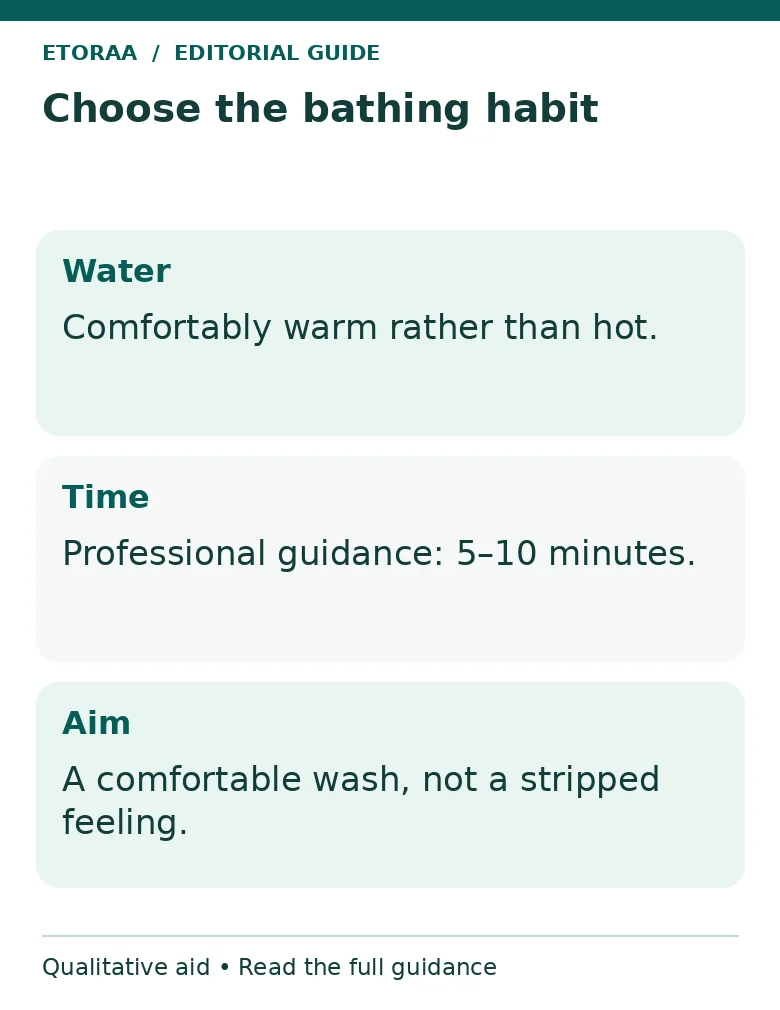
The American Academy of Dermatology recommends warm water and a five-to-ten-minute bath or shower for dry skin. Mayo Clinic also advises limiting long, hot bathing. The practical goal is a comfortable wash, not staying under the water until skin feels stripped. Read the AAD’s dry-skin guidance and Mayo Clinic’s self-care advice.
Start with water that feels comfortably warm, not painfully hot. If you tend to lose track of time, use a simple timer outside the splash area. You are building a habit, not measuring a biological response to the second.
Set up the bathroom before turning on the water
Place a clean towel and suitable moisturiser within reach of where you will dry off. Also, choose the cleanser you intend to use. Having the items ready makes it easier to finish without standing under running water while searching for a bottle.
Keep the floor and the place where you step out clear. A routine that looks luxurious but leaves slippery products or towels in the way is not practical. Put lids back on and wipe accidental spills when it is safe to do so.
If a long shower is your main relaxation ritual, move part of that time outside the water. For example, spend a few quiet minutes afterwards in comfortable clothing. Our short self-care routine offers ideas that do not require adding more heat or products.

Clean where needed without scrubbing harder
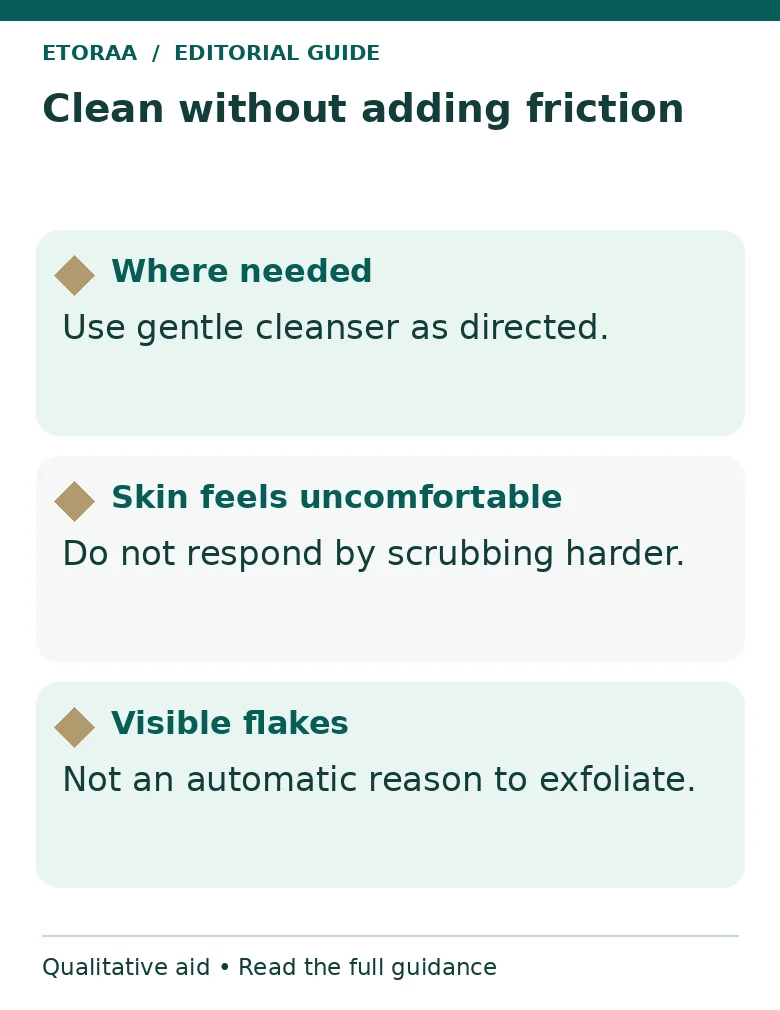
Use a gentle cleanser according to its directions. AAD guidance suggests applying it where needed, such as the underarms and groin, rather than creating thick lather everywhere. Keep products within their intended external use and rinse thoroughly.
Do not treat a tight feeling or a strong fragrance as proof of better cleaning. Also, avoid adding a scrub simply because the skin looks dry. Dryness and visible flakes do not automatically mean you need more exfoliation.
Think about tools as well as products. If rubbing with a rough cloth feels uncomfortable, use a gentler approach. Our washcloth-versus-shower-pouf guide discusses handling and care choices without claiming that either tool suits everyone.
Finish gently, then moisturise
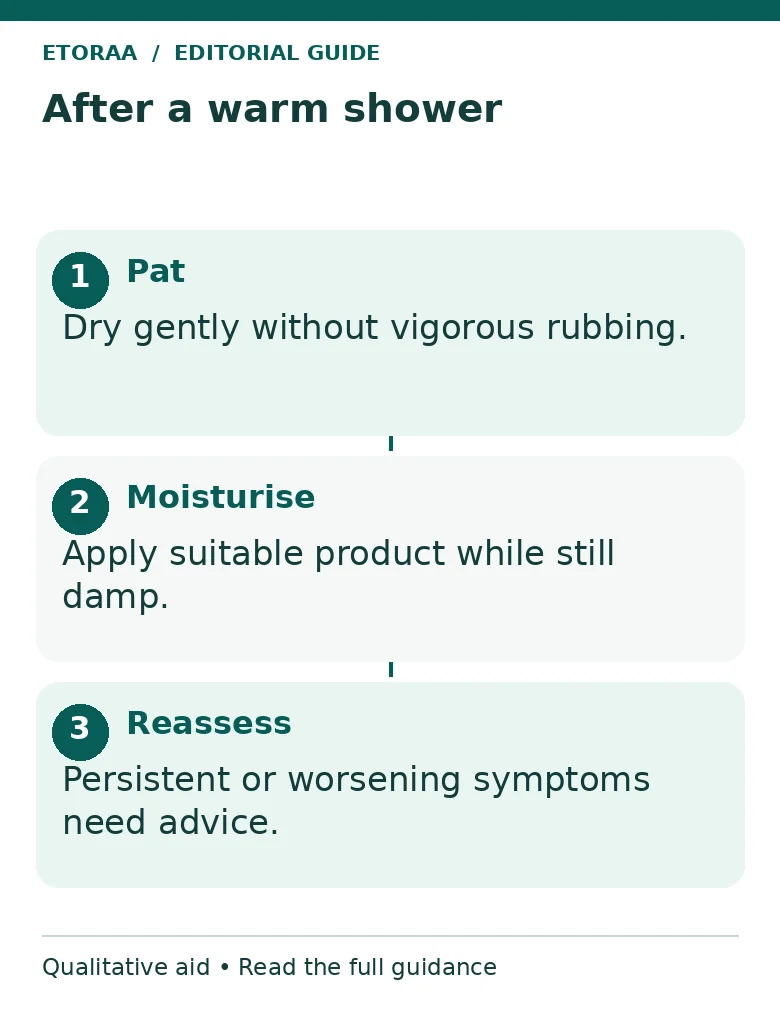
Pat rather than vigorously rub with the towel. Apply your suitable moisturiser while skin is still damp, following its directions. You do not need to leave water dripping onto the floor; the goal is to avoid fully drying out before moisturising.
For a realistic evening example, keep the sequence short: warm shower, rinse, step onto a safe dry area, pat lightly, then moisturise. Dress once the product has settled enough for comfortable clothing. Do not turn a straightforward finish into several obligatory layers.
University Hospitals also advises shorter warm bathing, gentle drying and moisturising promptly afterwards. Read its dry-skin information. These are supportive care habits; they do not identify why an individual’s skin is dry.
Reassess comfort, not an invented score
After a few ordinary washes, note whether the routine feels comfortable and manageable. Record changes plainly, such as “less time under hot water” or “remembered moisturiser after bathing.” Do not call those observations a measured barrier-repair result.
If dryness persists, worsens or disrupts sleep, seek medical advice. Pain, open sores or signs of infection also need assessment. Avoid treating those problems by adding fragranced oils, stronger exfoliants or non-prescribed medicines based on a beauty article.
Frequently asked questions
Is a cold shower necessary to close pores?
This guide does not recommend a cold finish for that claim. Choose a comfortable warm shower and gentle aftercare instead.
Is there one ideal temperature for everyone?
The professional advice cited here says warm rather than hot. We do not invent a precise universal temperature for different people and bathrooms.
Can body oil replace every moisturiser?
Different products do different jobs. Read the formula’s instructions and choose a finish that suits your needs rather than assuming one texture always replaces another.
Sources and scope
AAD, Mayo Clinic and University Hospitals pages accessed 30 October 2026; no single shared revision date was displayed. This is supporting evergreen guidance, with seasonal relevance where cold weather or indoor heating coincides with dryness. Illustrations are not clinical evidence or diagrams of skin biology.