
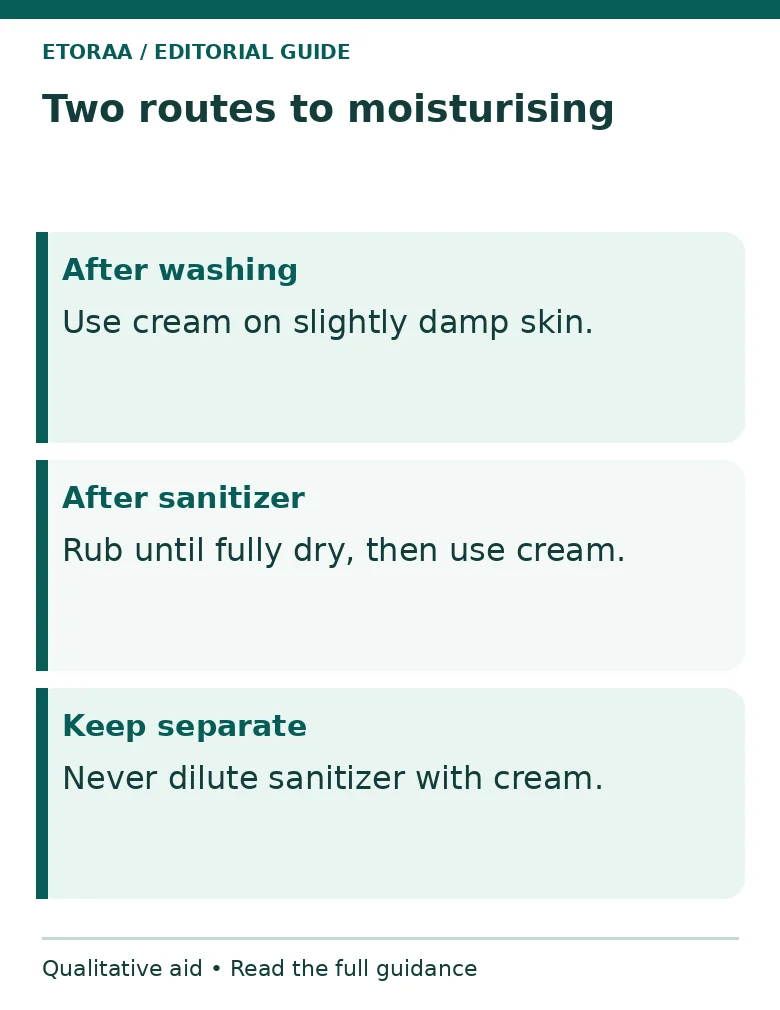
For dry hands, keep necessary handwashing and add moisturiser at the right moment. After washing, apply a suitable cream or ointment to slightly damp skin. After alcohol hand sanitizer, rub until fully dry first, then moisturise. Do not dilute sanitizer or replace hygiene with hand cream.
By Etoraa editorial. This source-based care guide covers everyday comfort, not a diagnosis or treatment plan for hand eczema.
Visuals are editorial aids. The featured illustration is AI-generated, and the explanatory graphics are original layouts. They do not show tested products or measured results.
Keep hygiene and comfort in the same routine
Dryness can make another wash feel unwelcome, but skipping important hand hygiene is not the answer. The American Academy of Dermatology recommends washing as needed and following with hand cream or ointment. It also distinguishes moisturising damp skin after washing from waiting until sanitizer has dried. Read the AAD handwashing guidance.
Build the routine around a reliable cue: the end of each hand-cleaning step. A cream in a drawer upstairs is easy to forget when you wash in the kitchen. Put an appropriate container where you can use it without reaching over food or leaving it on a wet ledge.
Start with what you own if it is suitable and in good condition. You do not need a serum, cuticle oil and several creams to make the basic habit work.
Use soap and water properly
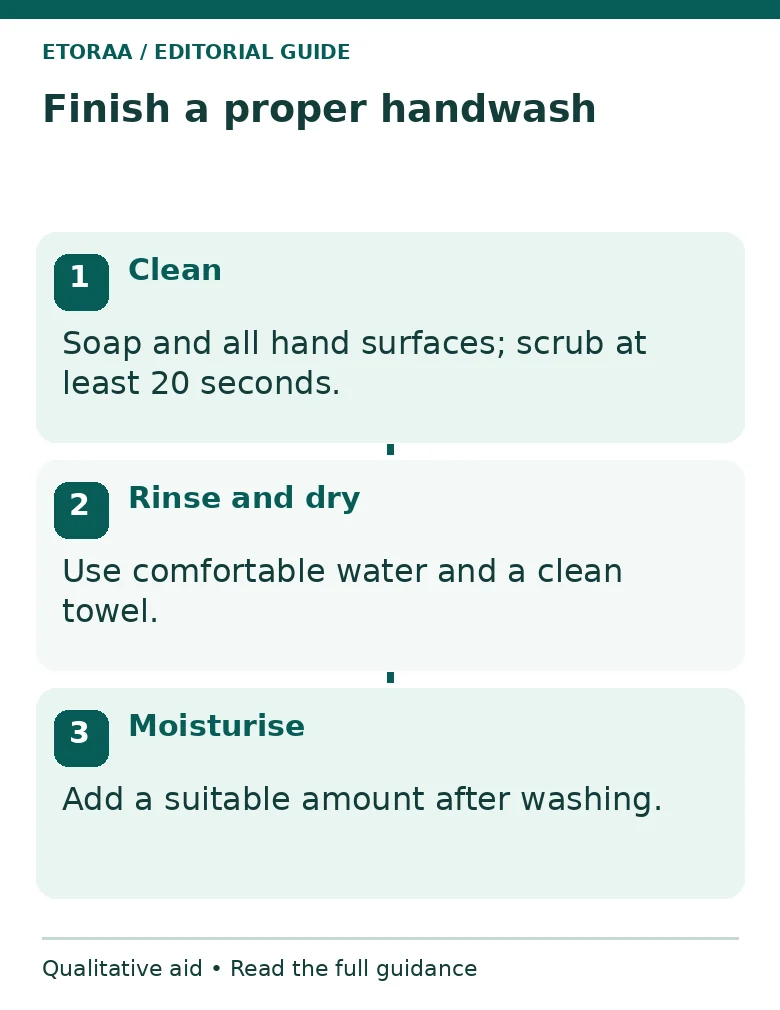
The CDC recommends scrubbing all hand surfaces with soap for at least 20 seconds, then rinsing and drying. Include the backs of the hands, between fingers and around the nails. Read its hand-hygiene explanations.
Use comfortable lukewarm water rather than making the wash hotter to feel more thorough. Dry gently with a clean towel. For ordinary dry-skin care, follow with moisturiser while a little dampness remains, as the AAD advises. If your work has a specific hygiene protocol, follow that protocol.
For example, after returning from shopping, complete the wash first. Then apply a small workable amount of cream to the backs, fingers and nail folds. Let it settle before handling something that needs a secure grip. Do not leave a thick slippery layer simply because more looks more caring.
Let sanitizer finish before moisturising
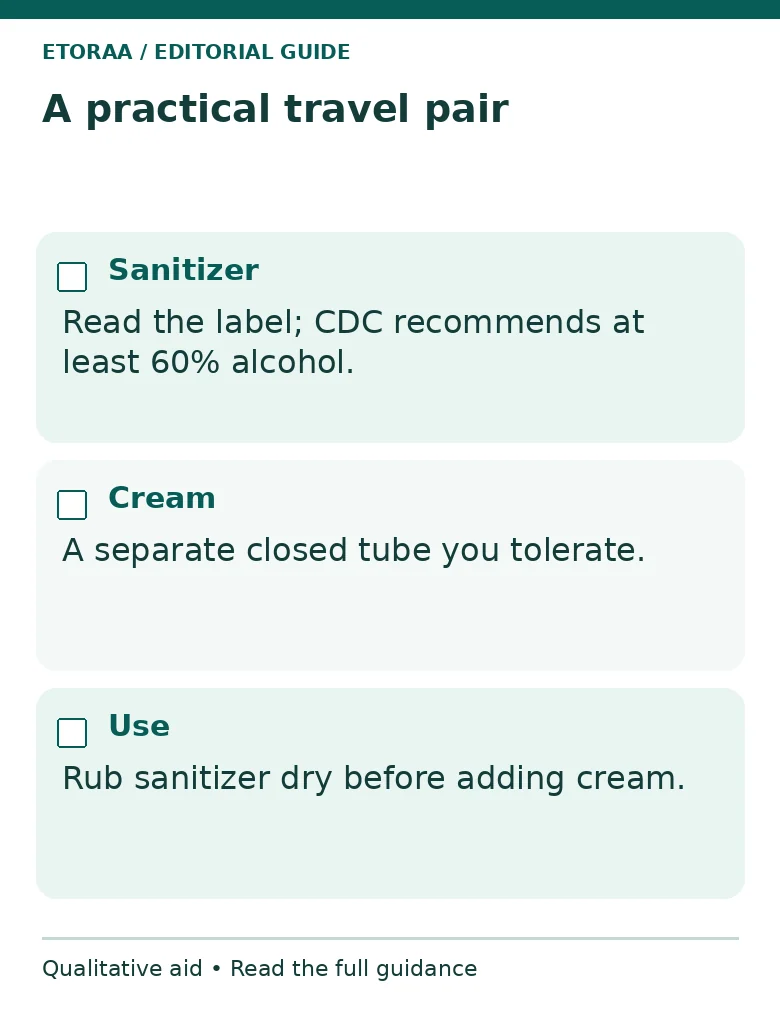
When soap and water are unavailable, the CDC recommends a sanitizer with at least 60% alcohol. Use the label’s amount, cover all surfaces and rub until dry. Do not wipe or rinse it off early. Sanitizer is less effective on visibly dirty or greasy hands, so choose soap and water when available in that situation. See the CDC sanitizer guide.
Only after it has dried should you add cream. Keep the products separate; do not mix them in a bottle or put cream into sanitizer to make a homemade moisturising blend. That changes a product designed to be used as supplied.
Make a travel pairing: one correctly labelled sanitizer and one closed cream tube. Check that both lids hold securely and that the labels remain readable. Put a leaking product aside rather than carrying it loose against your cosmetics.
Choose comfort and know when to get advice
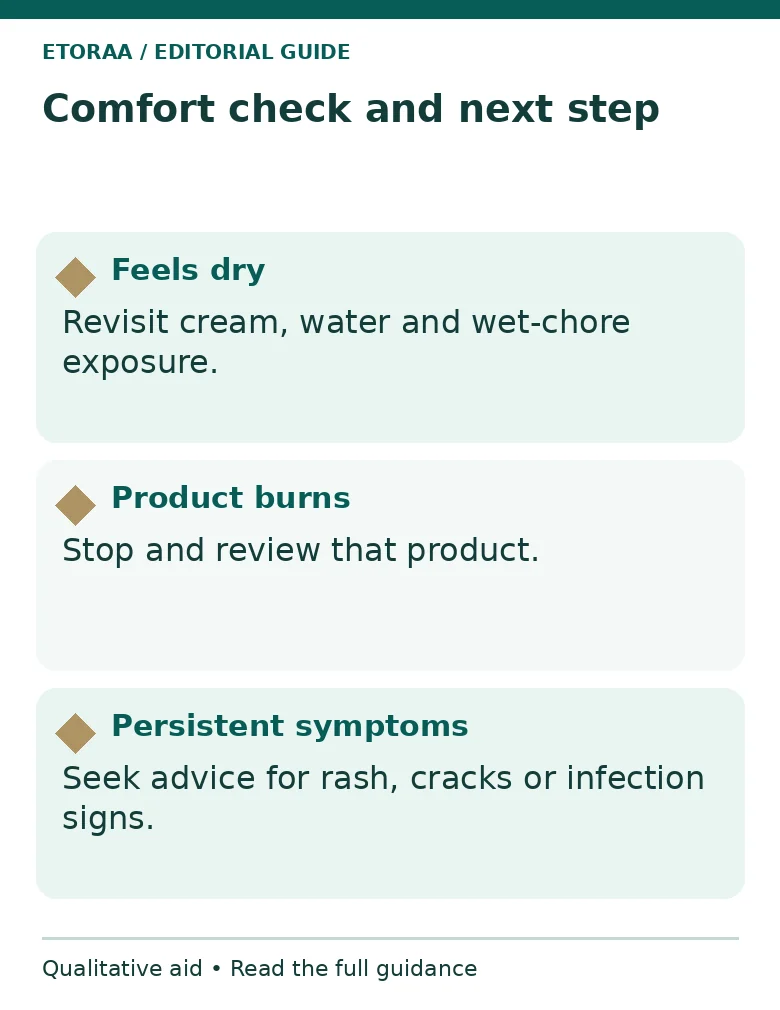
For dry, chapped hands, the AAD suggests fragrance-free, dye-free creams or ointments, including options containing petrolatum or mineral oil. Choose a texture that feels tolerable and is practical to reapply. A product that burns is not proving that it is working.
For wet chores, use appropriate protective gloves and keep their insides clean and dry. The Saudi Ministry of Health’s hand-eczema guidance explains that water, detergents and friction can be irritants. Its clinical advice is a reason to seek individual help when symptoms persist, not to diagnose yourself from a checklist. Read its hand-eczema information.
Seek professional advice for persistent rash, painful cracks, bleeding or signs of infection. Our hand-cream versus serum guide covers the cosmetic-format decision. The cuticle-oil comparison explains why a targeted nail-fold step does not replace whole-hand care.
If you are browsing the Etoraa body care collection, use the checks above to compare individual labels and directions before choosing.
Frequently asked questions
Should cream go on before sanitizer?
Complete the sanitizer step first and let it dry, then apply cream. Follow any additional protocol required in your workplace.
Can I skip soap because my hands are dry?
Keep appropriate hygiene. Change the water temperature, product choice and moisturising habit instead of leaving necessary cleaning unfinished.
Does hand cream replace protective gloves?
No. Cream and suitable protection have different jobs. Choose gloves appropriate for the task, especially when handling cleaning products.
Sources
AAD: dry skin from handwashing, retrieved page date unavailable. CDC: hand-hygiene FAQ and sanitizer guidance, retrieved update dates not confirmed. Saudi MOH: Hand Eczema, content update 10 December 2023. Accessed 31 October 2026.