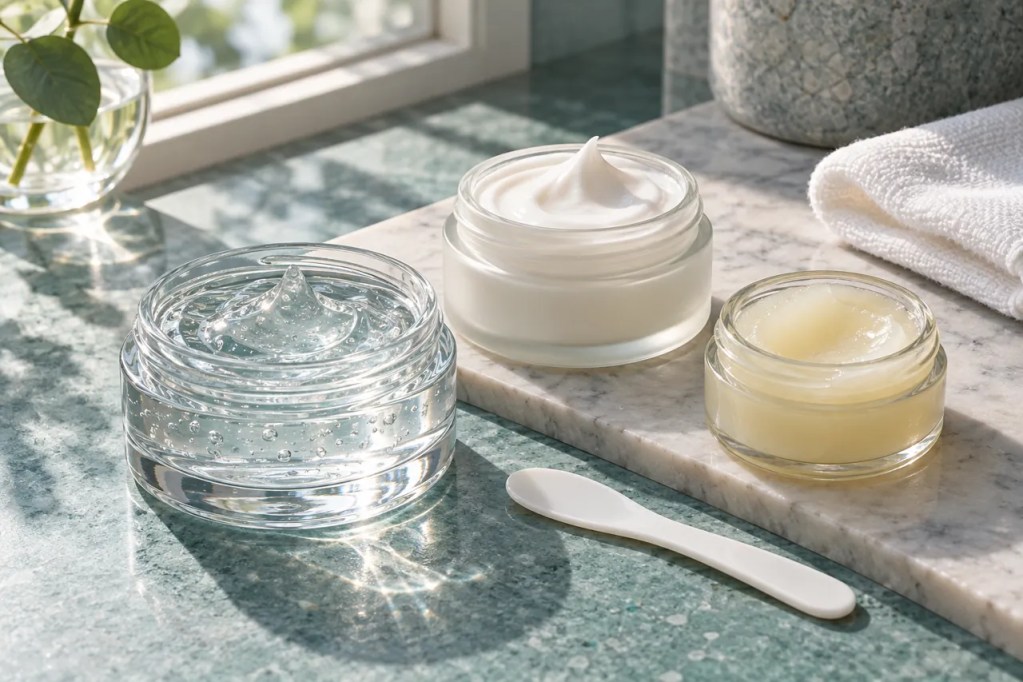
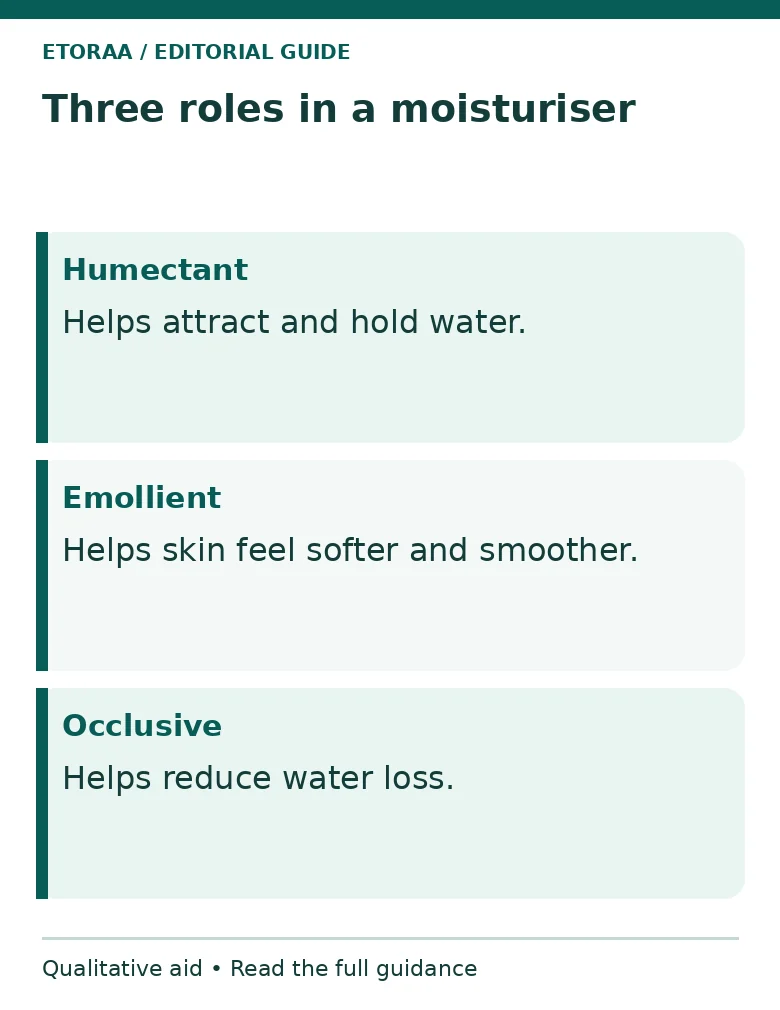
Humectants help attract and hold water, emollients soften the feel of skin, and occlusives slow water loss. These are ingredient roles, not three products you must buy. A single moisturiser can combine them, and some ingredients have more than one role.
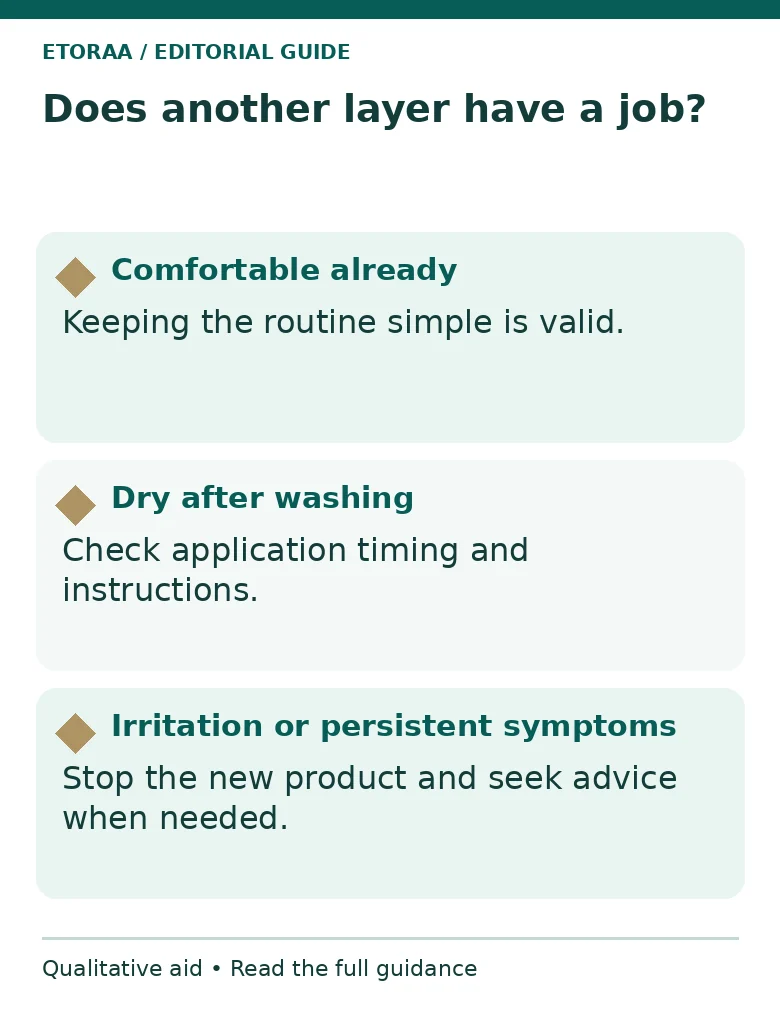
By Etoraa editorial. This source-based guide explains cosmetic labels; it is not a product test, diagnosis or expert review. The featured image is an AI-generated illustration. The four body graphics are qualitative editorial aids, not scientific measurements.
Humectants, emollients and occlusives: three useful roles
A helpful starting point is to ask what the ingredient contributes to the finished formula. Glycerin is a familiar humectant. Glyceryl stearate can contribute emollience. Petrolatum and dimethicone are examples of ingredients with occlusive properties. DermNet explains these roles, while also noting that moisturisers contain other components, including preservatives.
Treat those examples as a small vocabulary, not a shopping prescription. Finding one ingredient does not establish its amount, the product’s texture or how comfortable it will feel on your skin. Nor does a category label prove that a formula will suit everyone.
Read the whole moisturiser rather than count ingredients
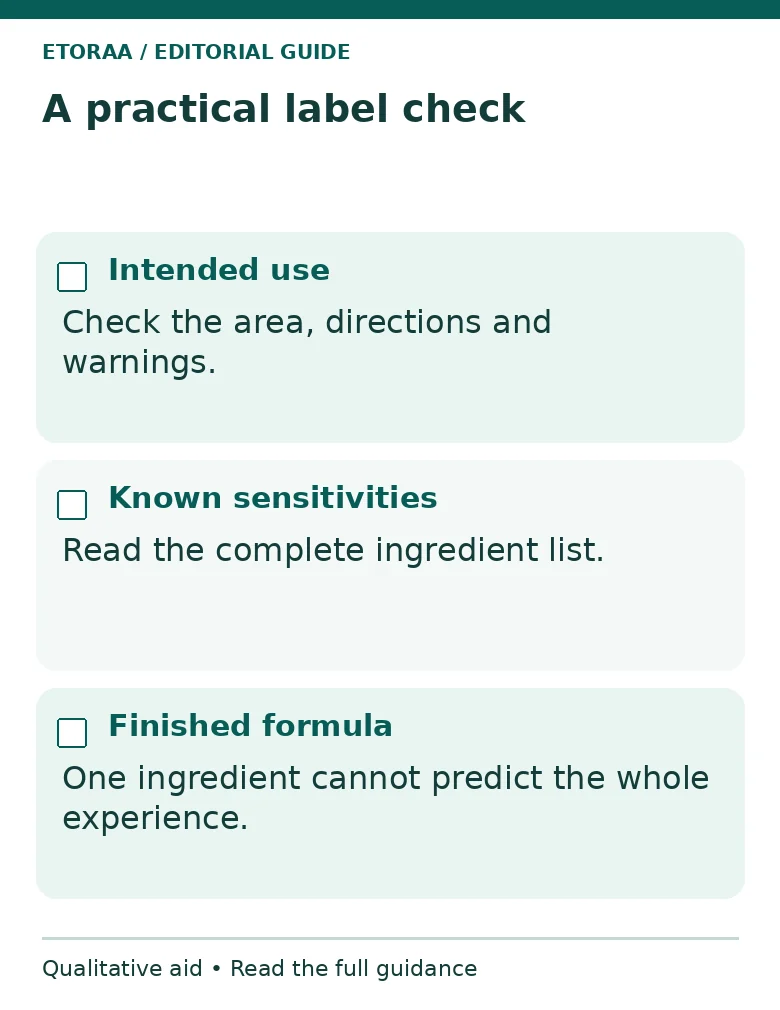
Start with the intended area and instructions. A body product is not automatically intended for eyelids. A leave-on cream and a wash-off cleanser have different jobs, even if both list glycerin. Then check warnings and any ingredients you already know you need to avoid.
Next, note what you want from the product. For example, “a comfortable hand cream I can use before typing” is more useful than “the most occlusive formula”. Your preference includes texture, packaging and whether you will use it consistently. A rich product that remains untouched in a drawer cannot support your ordinary routine.
Our beauty-label checklist helps separate the ingredient list from directions and claims. If you browse the Etoraa skincare collection, compare individual labels rather than treating the collection name as a suitability guarantee.
Test one practical change in your routine
Suppose a light moisturiser feels comfortable at breakfast but your hands feel dry after washing later. First look at when you reapply it. A different schedule may be more useful than adding a serum and oil. The American Academy of Dermatology advises moisturising after washing while skin is still damp.
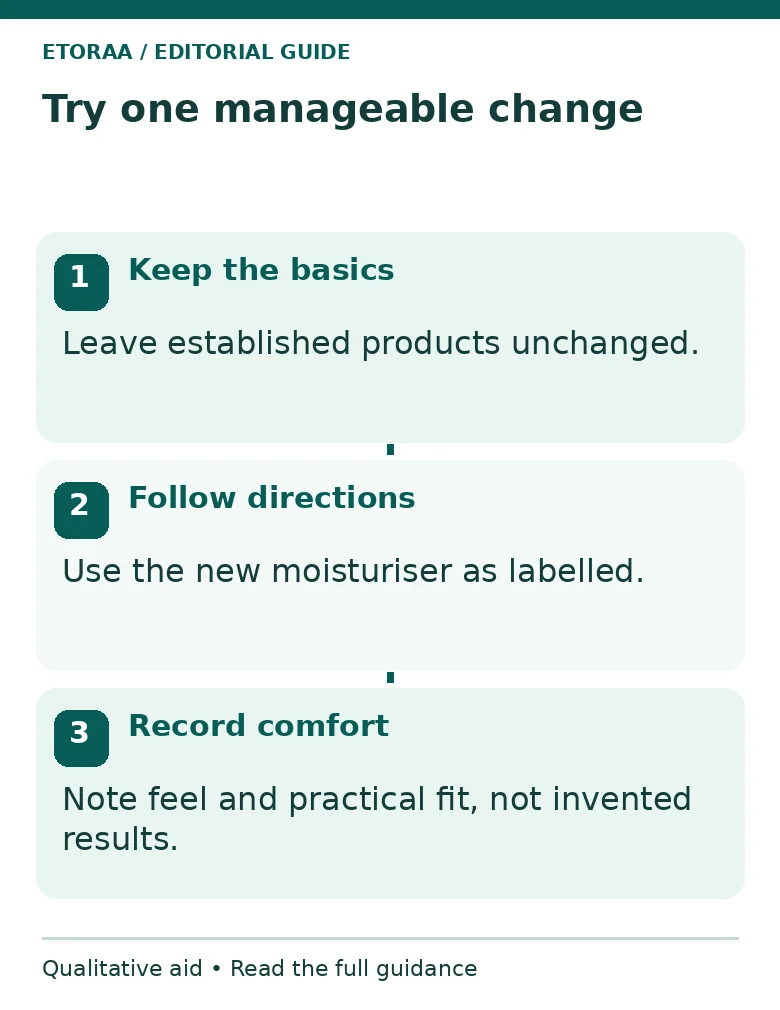
For a simple comparison, keep your cleanser and other established products the same. Follow the new moisturiser’s directions and record comfort, spreadability and whether it interferes with the next task. Change one item at a time. This is an everyday preference check, not a controlled test of barrier function.
Write concrete observations: “comfortable after washing; too slippery for my keyboard” is useful. “Repairs my barrier twice as fast” would require evidence you have not collected. Our small skincare-trial guide explains the limits of a home trial.
Keep the terminology flexible and know when to stop
You may see “emollient” used broadly for a moisturising product, or narrowly for an ingredient that softens skin. Cleveland Clinic discusses both product use and ingredient roles. Different wording does not mean that three separate layers are necessary.
If an established moisturiser feels comfortable and meets your needs, understanding its ingredients need not trigger a purchase. If a new product causes irritation, stop using it. Persistent dryness, a rash, painful cracks or unexplained symptoms deserve professional advice rather than repeated cosmetic experiments.
Frequently asked questions
Do I need a separate humectant serum?
Not automatically. Your moisturiser may already contain humectant ingredients. Decide whether another step has a clear purpose before adding it.
Is the thickest moisturiser always best?
No. The intended area, formula, comfort and practical use all matter. A heavier feel is not an independent performance test.
Can an ingredient do two jobs?
Yes. Ingredient roles can overlap. Use the three terms to understand a formula, not to sort every ingredient into a rigid single box.
Sources and scope
Accessed 1 November 2026: DermNet, Emollients and moisturisers (contributors dated 2022 and earlier); Cleveland Clinic, Emollients (updated 17 June 2022); American Academy of Dermatology, dry-skin tips (updated 2 January 2026). This is supporting evergreen guidance relevant to seasonal dryness, not a new clinical development.