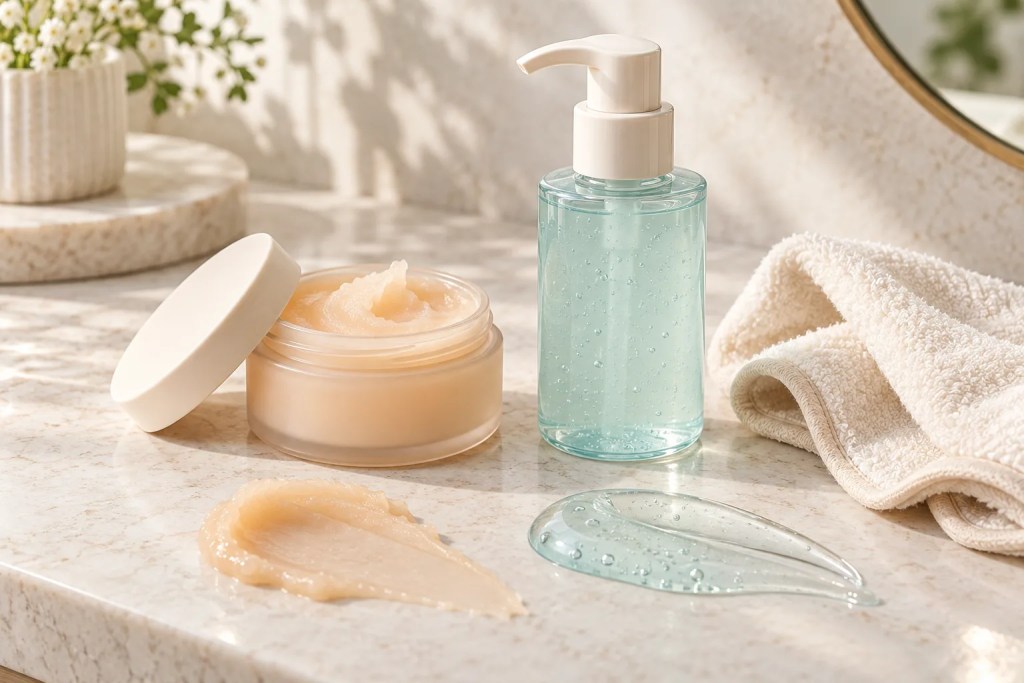
Double cleansing can help remove stubborn makeup, heavy emollient layers or water-resistant sunscreen, but it is an optional method rather than a requirement for every face and every night. If one gentle cleanser removes the day comfortably, a second step may add effort without benefit.
What double cleansing means
The first step is usually an oil, balm or micellar-style remover intended to loosen makeup and sunscreen. The second is a water-based facial cleanser intended to remove remaining residue and ordinary soil. “Oil first, foam second” is a format description, not a guarantee of gentleness.
When two steps may make sense
- You wear long-wear or waterproof makeup.
- Your sunscreen is water resistant and one wash leaves a film.
- You use a remover around the eyes and want to wash away residue.
- Your single cleanser requires heavy rubbing to remove colour.
When little is on your face, start with one wash. Cleansing twice by habit can make some skin feel dry or tight, especially when both products are strong or the water is hot.
A gentle method
- Use clean hands and follow the first product’s amount and application directions.
- Massage lightly; do not use the balm as a facial scrub.
- Emulsify or rinse as directed. If it is a micellar product, follow its label.
- Apply a mild second cleanser with your fingertips.
- Rinse with lukewarm water and pat dry with a clean towel.
The American Academy of Dermatology recommends a gentle, non-abrasive cleanser and applying it with fingertips rather than abrasive tools. Scrubbing harder does not make cleansing more complete.
Choose the second cleanser by comfort
A gel may feel fresh, a cream may feel cushioned and a low-foam lotion may suit someone who dislikes bubbles. Judge the complete formula by how effectively it rinses and how your skin feels afterwards. Tightness, stinging or persistent redness is a signal to simplify.
Eye makeup needs extra care
Use a remover labelled for the eye area, keep eyes closed and hold a saturated pad briefly before wiping outward. Do not repeatedly drag delicate skin. If a product enters the eye, follow its label and rinse as appropriate. Persistent pain or redness deserves medical attention.
What to do after cleansing
Apply any prescribed treatment as directed. For an ordinary cosmetic routine, a suitable moisturiser may be enough. In the morning, use sunscreen according to its label. Double cleansing does not replace those steps or compensate for sleeping in makeup repeatedly.
Test changes cautiously
If you introduce a balm and a new second cleanser at the same time, you will not know which caused a problem. Add one product first and consider the AAD’s small-area testing guidance for new skincare.
Review the result before adding an extra step. If cotton pads still show colour, identify whether the product is waterproof or concentrated around the lashes rather than washing the whole face repeatedly. If the skin feels calm and makeup is gone, stop. A squeaky sensation is not a necessary sign of cleanliness.
FAQs
Must oily skin double cleanse?
No. Skin type alone does not create a rule. Use the least complicated method that removes what you wore comfortably.
Can micellar water be the first step?
Yes, when the label supports the use and it removes your products effectively. Follow any rinse directions.
Should I double cleanse in the morning?
Usually there is less to remove. One gentle cleanse—or rinsing when appropriate for you—may be enough. Complete your skincare routine after the cleansing step is settled.
Sources
- AAD — Face washing 101 — not displayed; accessed 21 October 2026.
- AAD — How to test skin care products — 2021-08-10; accessed 21 October 2026.