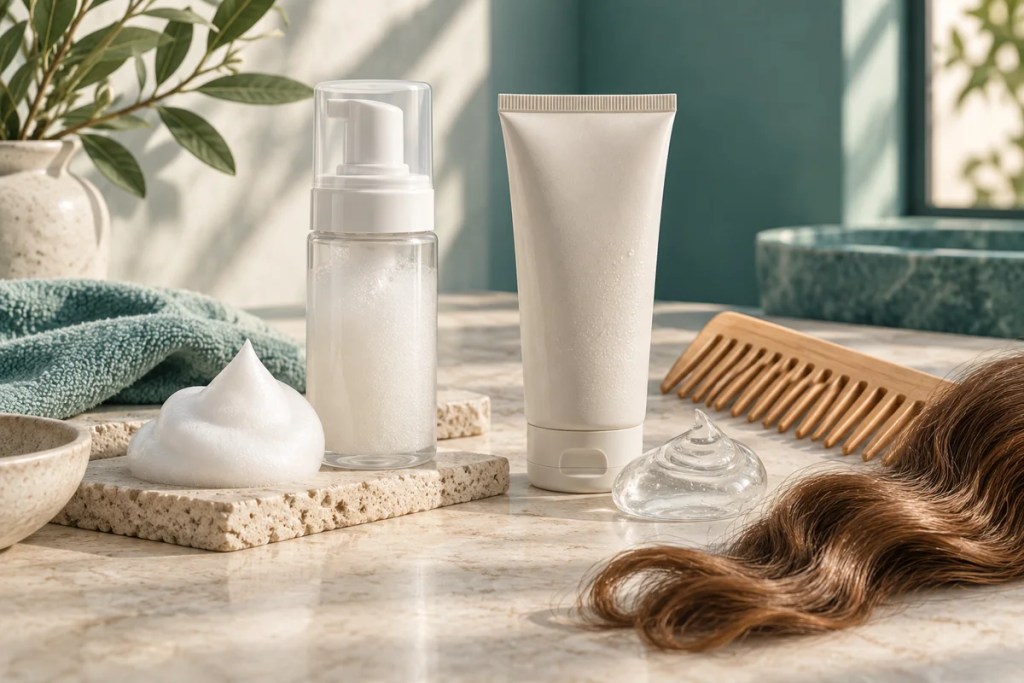
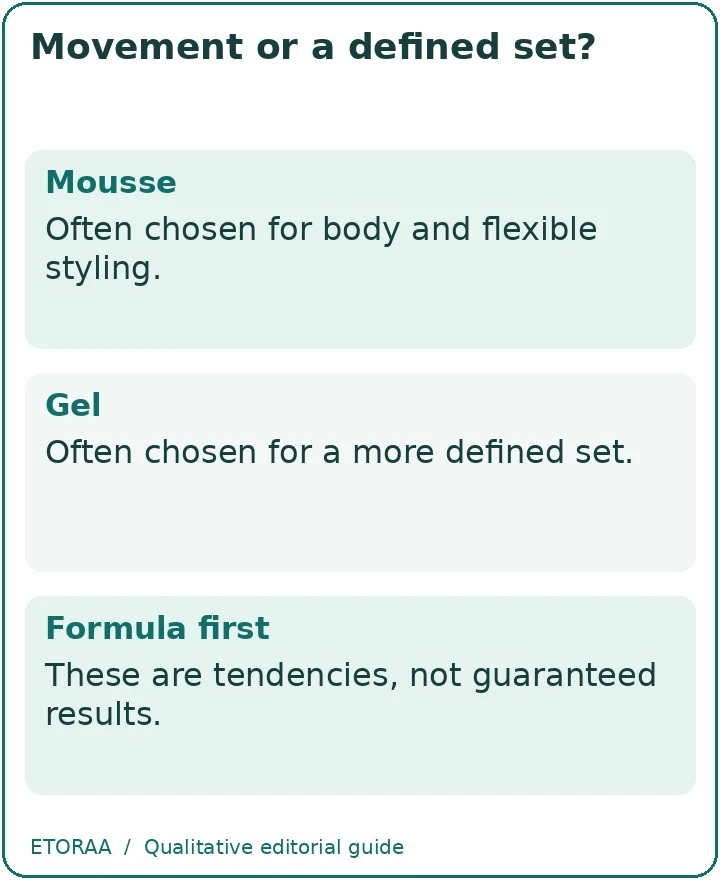
Hair mousse vs gel is best decided by your styling goal and the exact product directions. Mousse is commonly chosen for airy body, while gel is often chosen for a more defined set. Formulas overlap, so neither hair texture nor the package name can predict every result.
Etoraa editorial guide. General information, not a product test or clinical review. Featured visual: AI-generated illustration with generic props, not an Etoraa product photograph.
Hair mousse vs gel starts with the finish
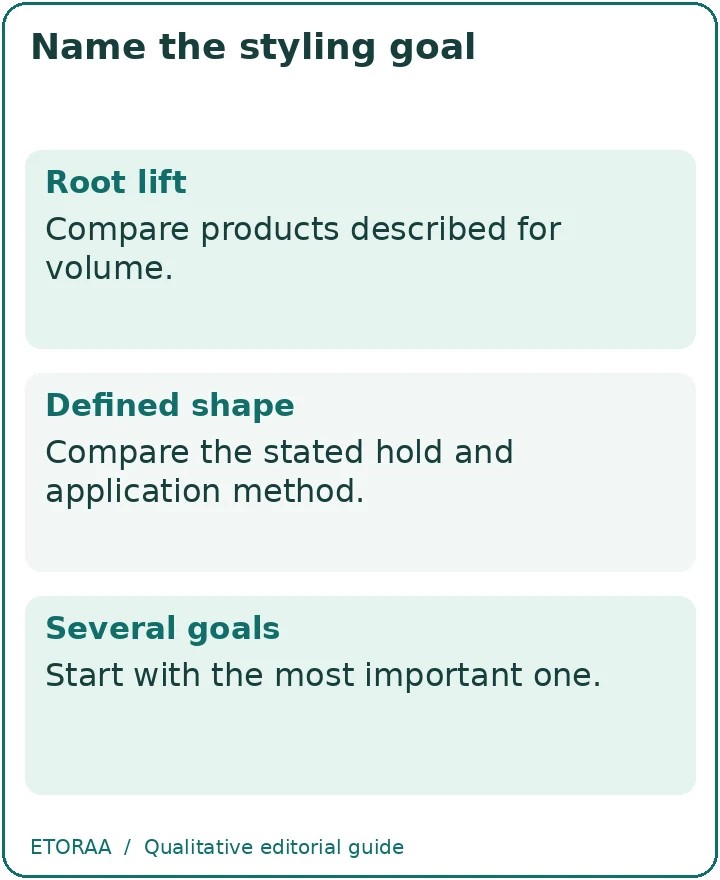
Write down one goal: more root lift, a defined curl pattern, a smooth gathered style or less time spent styling. That makes the comparison concrete. A product that looks impressive in a curl tutorial may be the wrong tool if you want movement in a short blowout.
The Davines format comparison describes common differences in hold and texture. Treat such manufacturer guidance as a starting point, not proof that every gel is heavy or every mousse feels soft. Read the hold description and intended application state on the actual bottle.
Use the directions to plan application
Check whether the formula is intended for damp or dry hair and how it should be distributed. Dispense into your hands where directed and work through manageable sections. Applying more to the first section than the last can make the outcome hard to interpret.
Start with the manufacturer’s recommended amount, adjusted only as its instructions allow. There is no universal golf-ball quantity for every mousse or coin-sized quantity for every gel. Our gentle towel-drying guide helps with preparation without turning styling into aggressive rubbing.
Compare one variable on an ordinary day
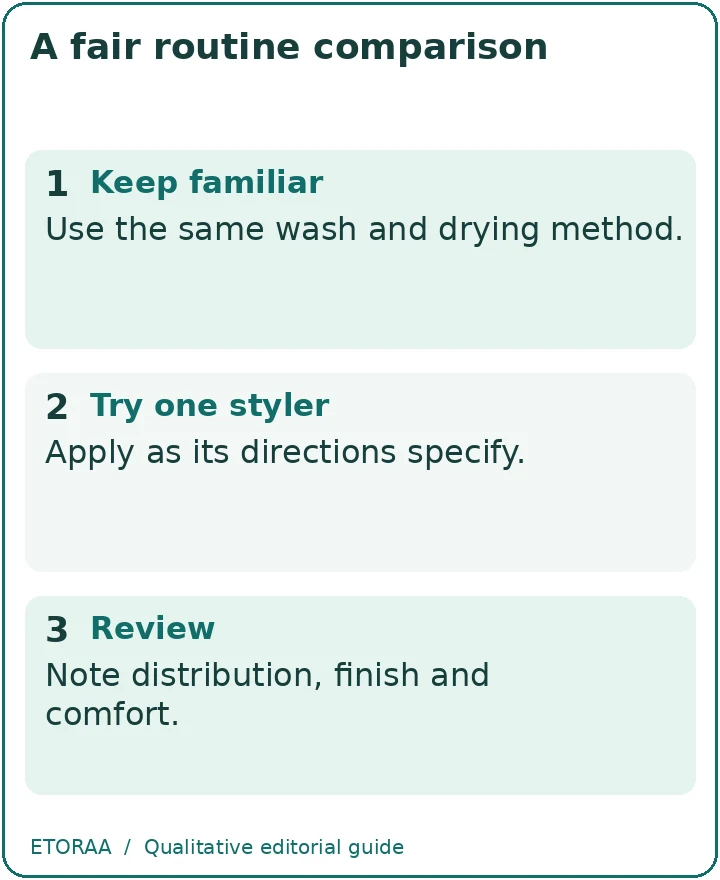
Choose a day when you can tolerate an imperfect finish. Keep washing, conditioning and the drying method familiar. Try one styler first and record how easy it was to distribute, the finish after drying and how comfortable your hair felt later.
If you switch from mousse to gel while also changing your conditioner and drying method, you will not know which change mattered. A simple comparison is not a scientific trial, but it can reduce random shopping. Photograph the finished style only as a personal reference, without presenting it as evidence of treatment or growth.
Troubleshoot before stacking products
If the finish is sticky or uneven, review amount, distribution and drying before adding another layer. If the hold is too soft, compare the exact product’s intended hold with your goal. Layering mousse and gel is an optional experiment, not a required routine.
Do not assume a styler provides heat protection. Check for that specific use and follow both tool and product directions. The AAD hair-care guidance advises limiting practices that damage hair, including excessive heat. Read our heat-protectant guide before using one product for several jobs. Browse haircare by current directions, rather than expecting a format to repair damage.

Common questions
Is gel unsuitable for fine hair?
No universal rule applies. Hold, amount, formula and the finish you want matter more than a blanket hair-type label.
Does a crunchy finish mean damage?
A firm set can be an intended styling effect. Discomfort or irritation is different; stop using a product that bothers your scalp.
Do I need both mousse and gel?
No. Begin with one clear goal and one appropriate product. Add another only when you can explain the useful role it would have.
Sources and context
AAD: avoiding hair damage and the linked sources above were accessed on 26 October 2026. This is an evergreen practical guide informed by current seasonal beauty conversations, not a claim of rising search volume, new research or measured product superiority.