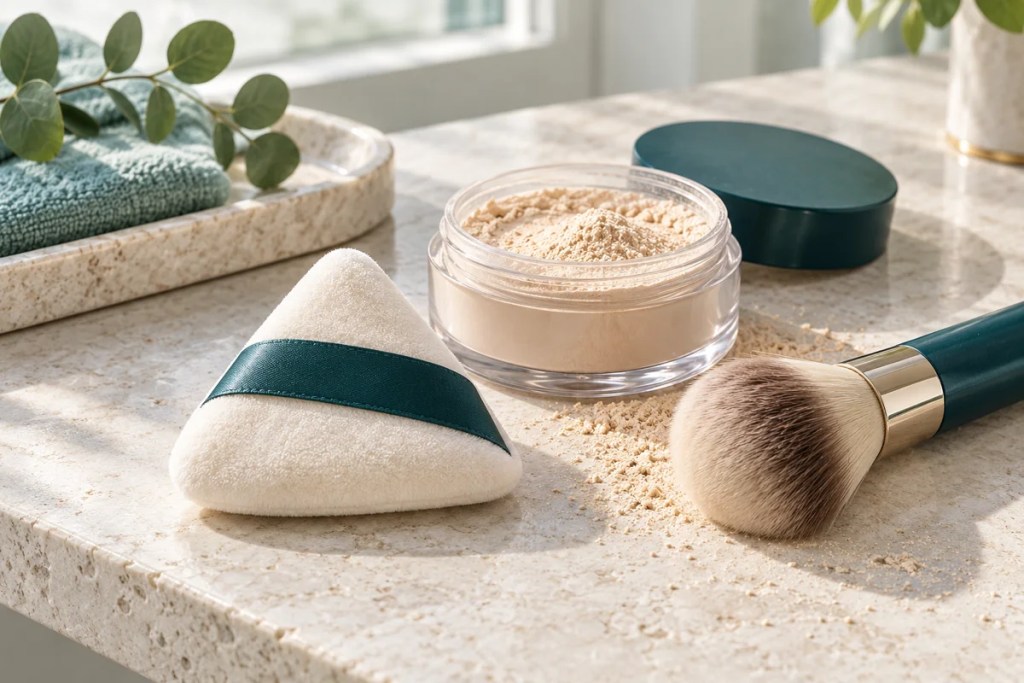
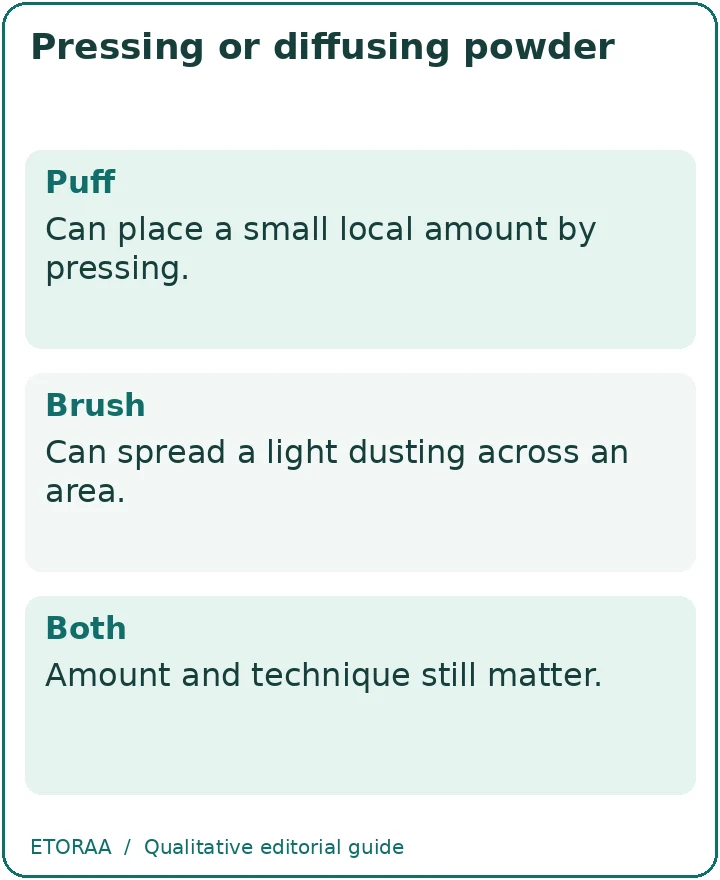
Powder puff vs brush is a practical choice about how you place powder. A puff can help press a small amount into a chosen area, while a soft brush can distribute a lighter dusting. The powder formula, amount and technique matter too; neither tool automatically makes makeup last all day.
Etoraa editorial guide. General information, not a product test or clinical review. Featured visual: AI-generated illustration with generic props, not an Etoraa product photograph.
Powder puff vs brush: choose the area first
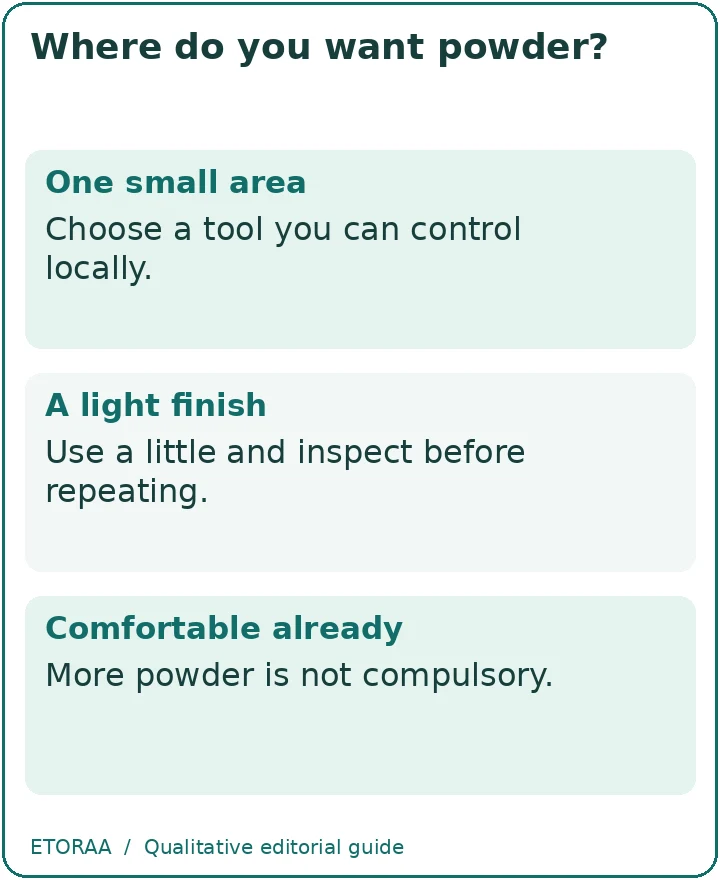
Decide where you actually want powder before choosing the tool. You might want less visible shine beside the nose, a small amount over concealer or a light overall finish. Those are different tasks. There is no need to coat the whole face because a tutorial uses a large puff.
L’Oréal’s tool comparison describes common differences between pressing and diffusing powder. Treat this as manufacturer technique guidance. A brush is not automatically sheer and a puff is not automatically heavy: both can deposit too much if loaded carelessly.
Load a little and check the result
Use the powder and tool as their directions specify. Pick up a small amount and remove excess in a clean, suitable way before touching the face. Press or sweep gently rather than increasing pressure to make the product disappear. A smaller tool may be easier to control around a small area.
Check the finish in normal light before adding another pass. If the area already looks comfortable, stop. A close-up camera can make normal texture appear more important than it feels at a conversation distance. Makeup does not need to turn moving skin into a flat surface.
Separate setting from covering more
A tool change will not necessarily solve an unsuitable powder shade or a base that is already too thick. Review those choices first. Our setting spray and powder guide covers the separate choice of finishing product; this guide focuses on application tools.
For example, someone who wants a small matte area can try a light local press with a puff and leave the rest of the face alone. Someone who prefers a less powdered look can use a soft brush sparingly. Neither method requires baking or a thick visible layer as an everyday rule.

Plan cleaning before buying a tool
Check whether the puff is washable or disposable and how the brush should be cleaned. Let washed tools dry fully before enclosed storage. Keep a used puff away from clean tools, and do not assume that the puff in a compact remains clean indefinitely because it looks neat.
The FDA cosmetic safety guide supports following directions and clean handling. Our brush-cleaning guide explains that separate maintenance step. Browse beauty tools by size, intended use and care instructions rather than choosing the biggest set. A tool you can control and maintain is a more useful starting point than an impressive-looking collection.

Common questions
Do I need a puff and a brush?
No. Start with the application you want and the tool you already use comfortably. A second tool is optional.
Will a puff always stop shine longer?
No category-wide wear claim is made here. Powder, amount, skin, application and the day’s conditions all affect the finish.
Can I use the same puff for liquid foundation?
Only if the tool’s directions support that use. Different materials and surfaces have different jobs; do not assume every triangular tool is interchangeable.
Sources and context
FDA: using cosmetics safely and the linked sources above were accessed on 26 October 2026. This is an evergreen practical guide informed by current seasonal beauty conversations, not a claim of rising search volume, new research or measured product superiority.