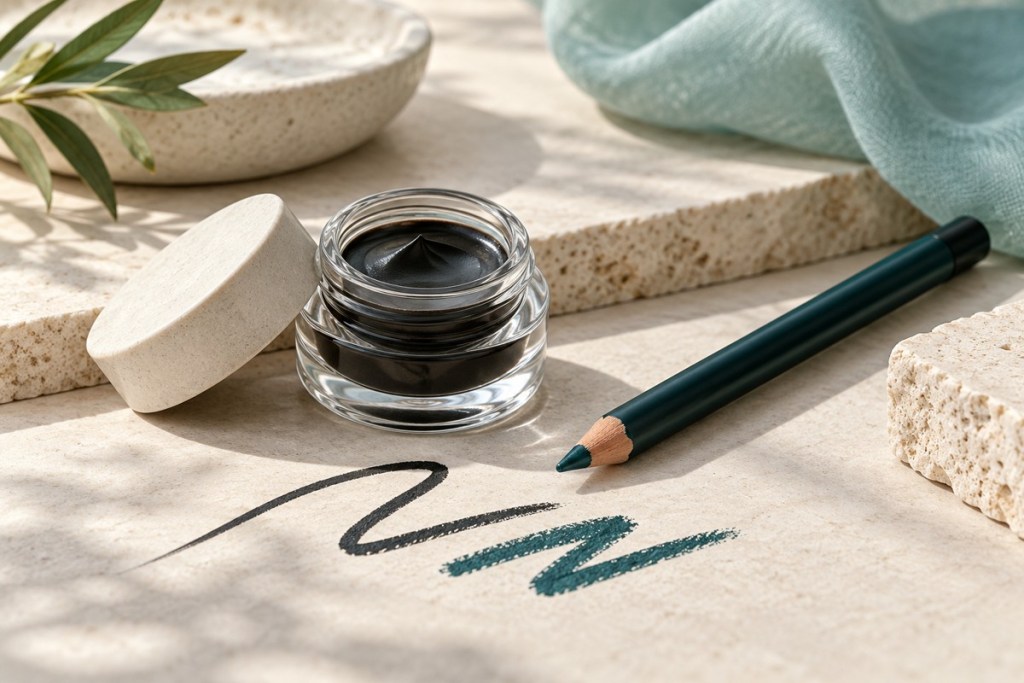
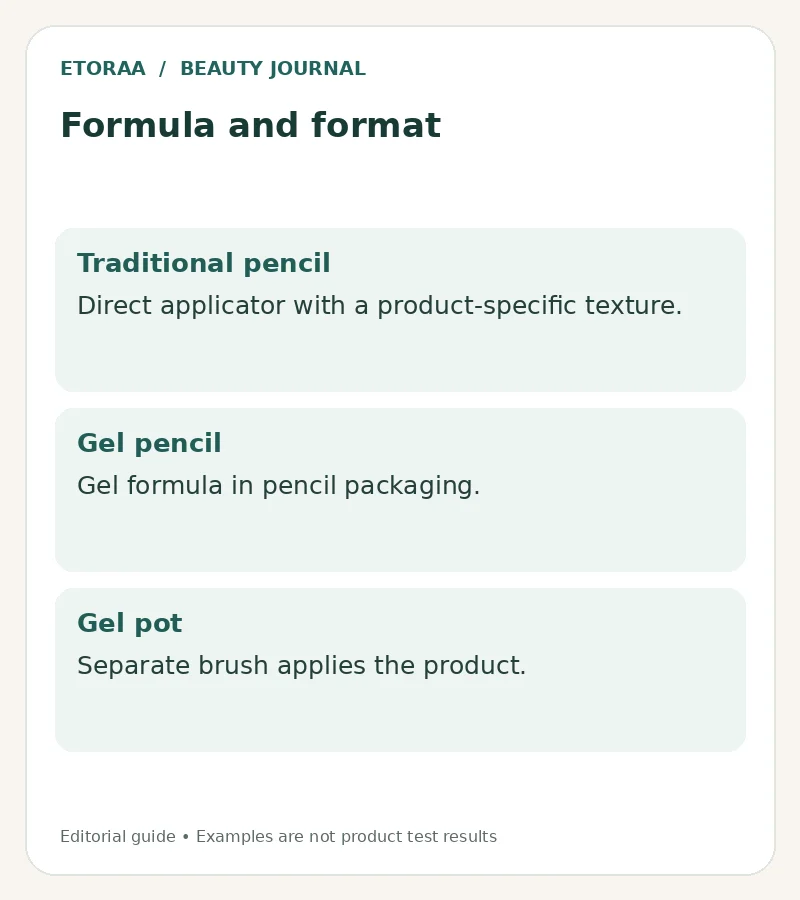
Gel eyeliner vs pencil is not a strict either-or choice: gel can come in a pencil. Compare the formula and its packaging separately. A traditional pencil offers direct application, while a gel pot needs a brush. Choose according to the line you want, the blending time and the removal method you can manage comfortably.
Gel eyeliner vs pencil: separate formula from packaging
Look for two pieces of information on the label. First, is the texture described as gel, cream or a traditional pencil formula? Second, does it come as a sharpenable pencil, retractable pencil or pot? This prevents you from buying a gel pencil while expecting the experience of using a brush and pot.
For a softly defined lash line, a pencil may feel convenient. A pot and small brush can offer more control over line width, but require separate tool care. Formula claims such as waterproof or long-wear apply to the individual product. They are not promises for every item with gel in its name.
Choose a line you can build in small steps
Begin with a thin line along the intended outer lash area and use short controlled strokes. Keep the eye relaxed and check the shape before thickening it. If you want a softly blended edge, work within the product’s stated setting time. Some formulas set quickly, so do one small area at a time.
For a gel pot, use a clean suitable brush and only a little product. Close the lid promptly. For a pencil, follow the sharpening or twist-up instructions rather than assuming the casing tells you how it works. A damaged or rough tip is a reason to stop and inspect the product, not press harder.

Keep application and removal in the same plan
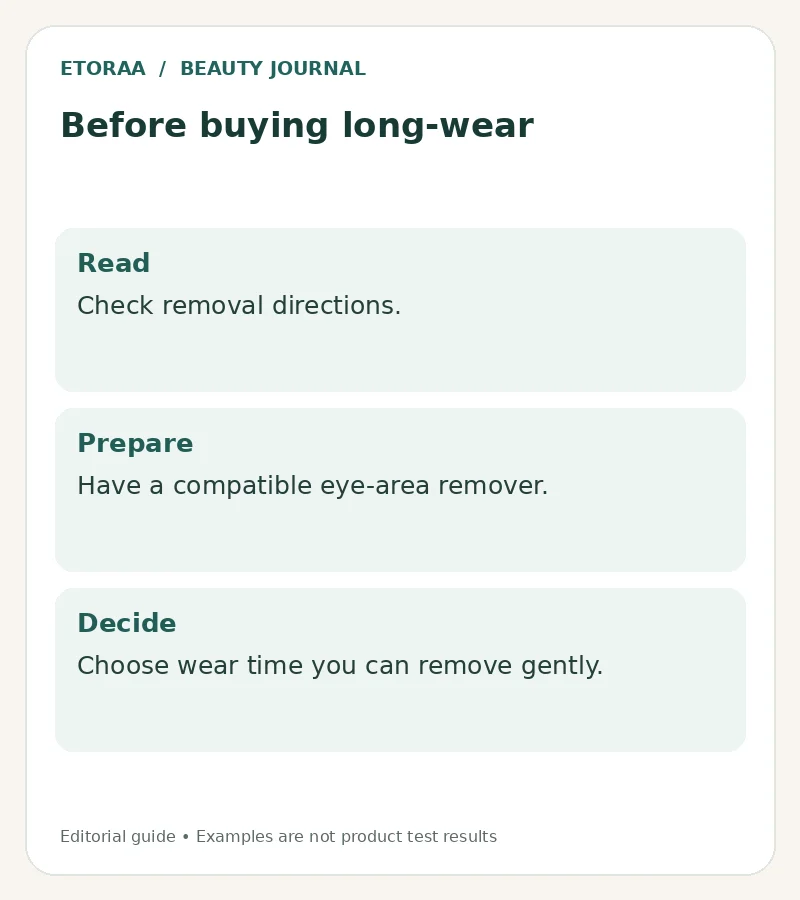
Before choosing a longer-wearing formula, read how to remove it. Use a compatible eye-area remover and gentle handling, following both products’ instructions. Do not pick at dried liner or repeatedly rub the lash area. A formula that needs more removal effort may be a poor match for a hurried evening routine.
For example, a beginner may prefer a familiar pencil for a short soft line during a normal workday. A brush user may choose a gel pot for a more deliberate wing. Both should practice when there is time to remove mistakes gently. You do not need a dramatic shape to make the product useful.
Put eye-area suitability before a makeup trend
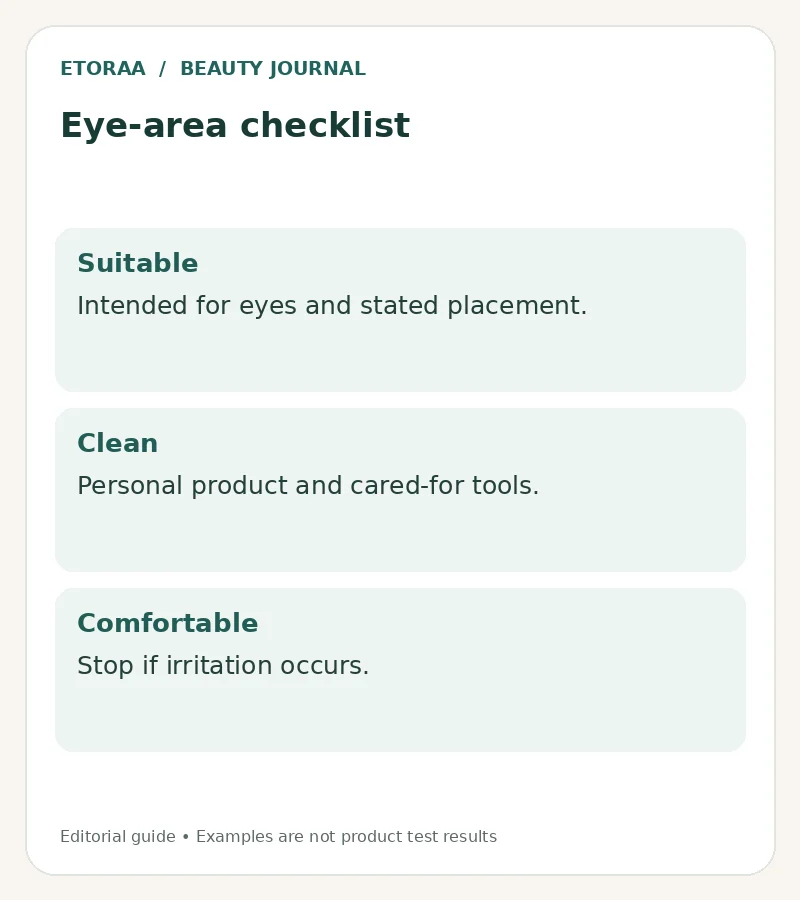
Use only products intended for the eye area and the placement stated by the maker. Do not assume lip pencils or craft pigments are substitutes. The FDA advises keeping eye cosmetics clean and not sharing them. Apply while stationary, and stop using a product that causes irritation.
A familiar outer lash-line application is a simpler starting point than copying waterline techniques from a video. If you have ongoing eye symptoms, get appropriate advice before experimenting. Keep brushes clean and avoid adding water or other liquids to revive a drying product. Follow its opening-period and storage guidance.
Common questions
Can a gel liner be a pencil?
Yes. Gel describes the formula, while pencil describes the delivery format.
Is gel always waterproof?
No. Check the specific product claim and removal instructions rather than assuming every gel formula behaves alike.
Build your next step
For a related practical guide, read Remove Long-Wear Makeup: Match the Remover and Reduce Rubbing. Explore Etoraa when you are ready to compare available beauty and self-care products. Check each listing for its actual ingredients, dimensions and care directions.
A line-control checklist before switching products
If application feels awkward, identify which part is difficult: reaching the area, holding the tool or controlling how much colour you place. Try a short segment in a comfortable mirror position rather than drawing a long line in one movement. Keep the test within the product’s intended eye-area use. Do not copy an online waterline technique unless the exact product is intended for that placement.
| Situation | Practical check |
|---|---|
| Tool feels hard to steer | Check grip and mirror position before changing the formula. |
| Line looks too heavy | Start with a smaller area and reassess before adding more. |
| Product resists removal | Read its removal directions instead of increasing rubbing. |
For your finished look, check ordinary viewing distance as described in our mirror lighting guide. Stop if use causes irritation.
Sources and editorial context
DB Cosmetics: eyeliner format guide · Maybelline: gel products in pencil and pot formats · FDA: eye cosmetic safety
Prepared by Etoraa editorial. This guide explains shopping and routine choices using the sources above and original illustrative examples. It does not claim hands-on product testing or clinical review. Sources checked on 27 October 2026. The featured image is an illustrative composition, not a photograph documenting a product test.