
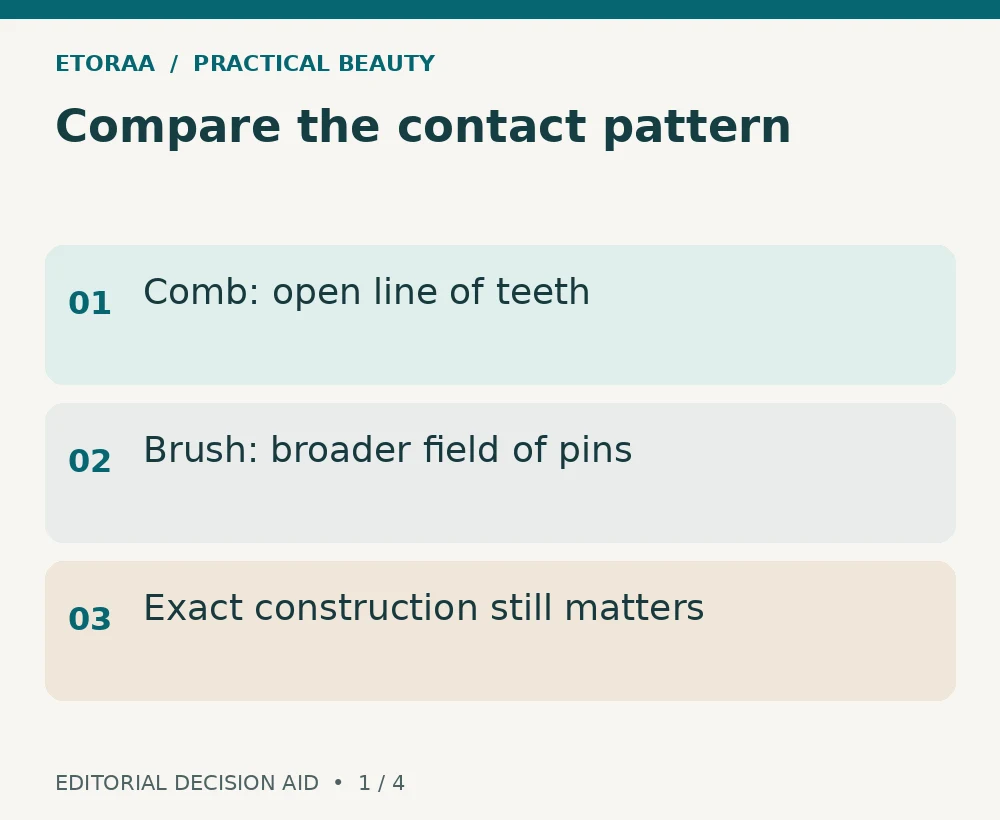
A wide tooth comb offers open spacing and direct access to small sections. A detangling brush uses a broader field of teeth or pins. Choose an exact tool that suits your wet or dry routine, then use manageable sections and stop when it catches rather than forcing a knot.
Etoraa editorial guide. Reviewed 28 October 2026. Original illustrations show generic objects; no comparative product testing was performed.
Begin with your routine and hair condition
Think about when tangles appear and what you normally do before detangling. A dense wash-day section and a small dry tangle near the ends are different situations. Note whether the tool permits wet use, whether conditioner is part of your routine and whether you can see and reach the area comfortably.
The American Academy of Dermatology advises gentle handling and starting at the ends. Its guidance also distinguishes the timing of combing straight hair from thick, curly hair. Those details are more useful than a rule that everyone must detangle in the same state. If your current method works comfortably, a new tool is optional.
Check the exact wide tooth comb or brush
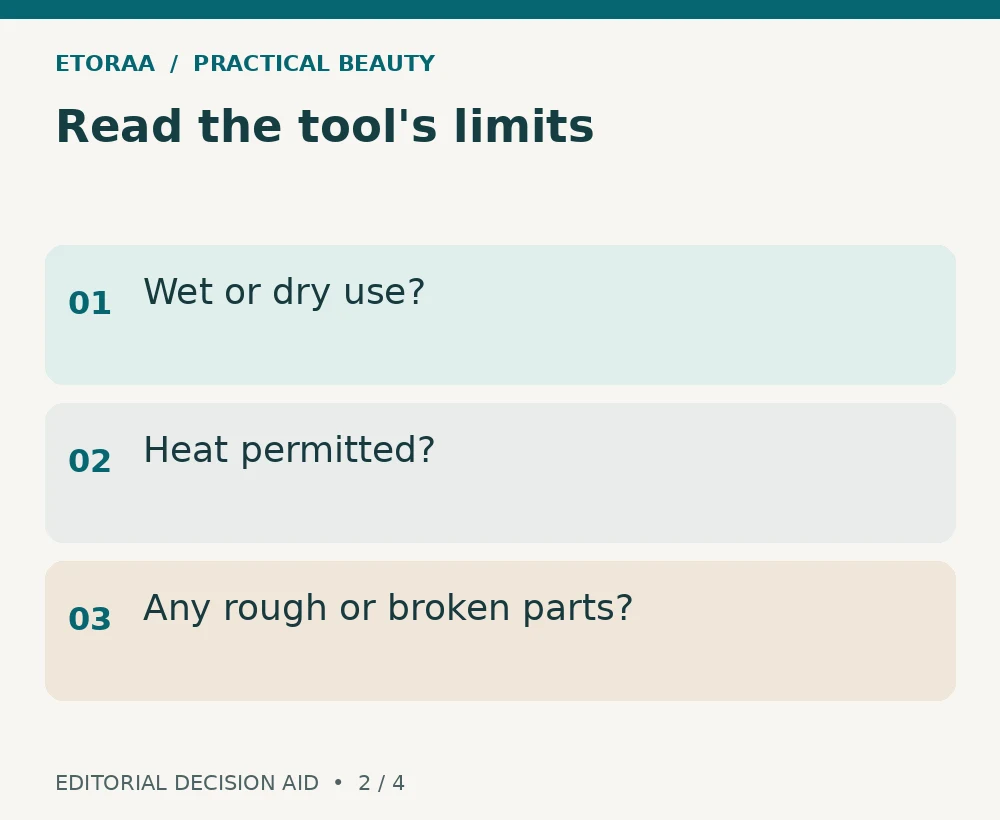
Run a visual check for cracked teeth, rough seams, missing tips or a loose cushion. Then read the maker’s intended uses. Some detangling tools are explicitly kept away from heat. A wet-use label does not make a brush suitable for a hot dryer, and an ordinary comb is not automatically a heat-styling tool.
Tangle Teezer’s Wide Tooth Comb is an example with its own wet, damp and dry directions and a warning against heat. Its claims describe that named design. Do not transfer its instructions or performance claims to every object with widely spaced teeth. Keep the model information available when comparing products.
Use a small section to judge handling
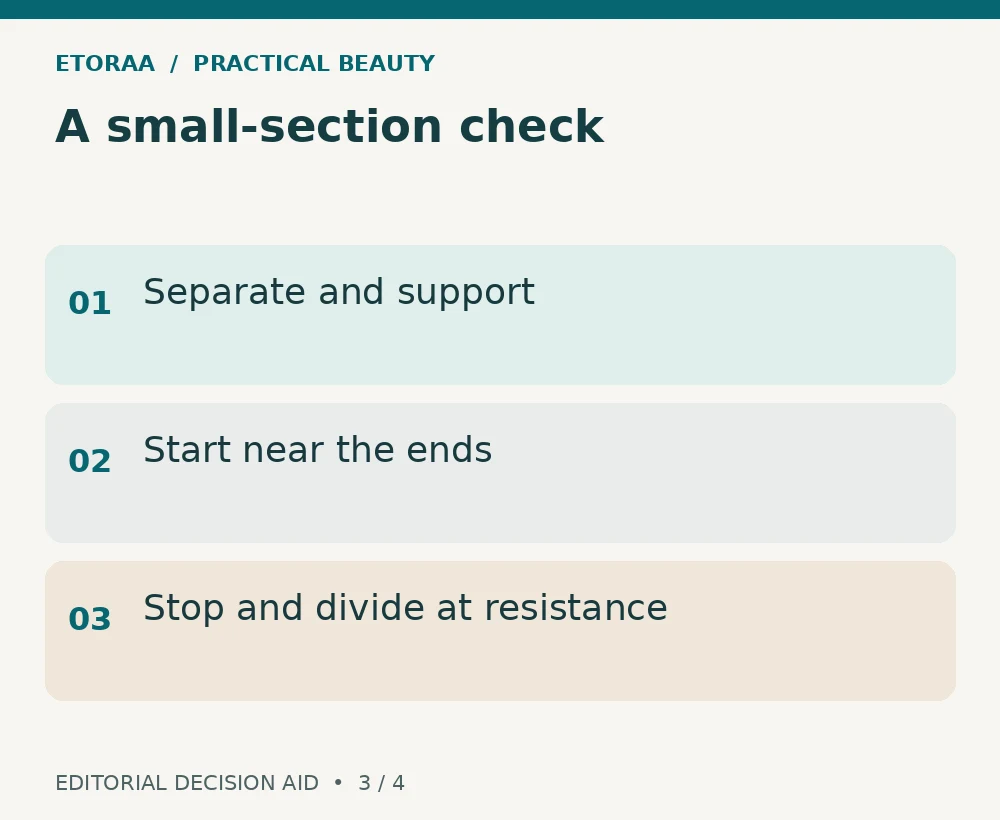
First separate a manageable section with your fingers. Support the hair so you are not pulling at the scalp, then begin near the ends. Stop if the tool meets a knot. Divide the area or return to gentle finger separation rather than repeatedly pushing the same stroke through resistance.
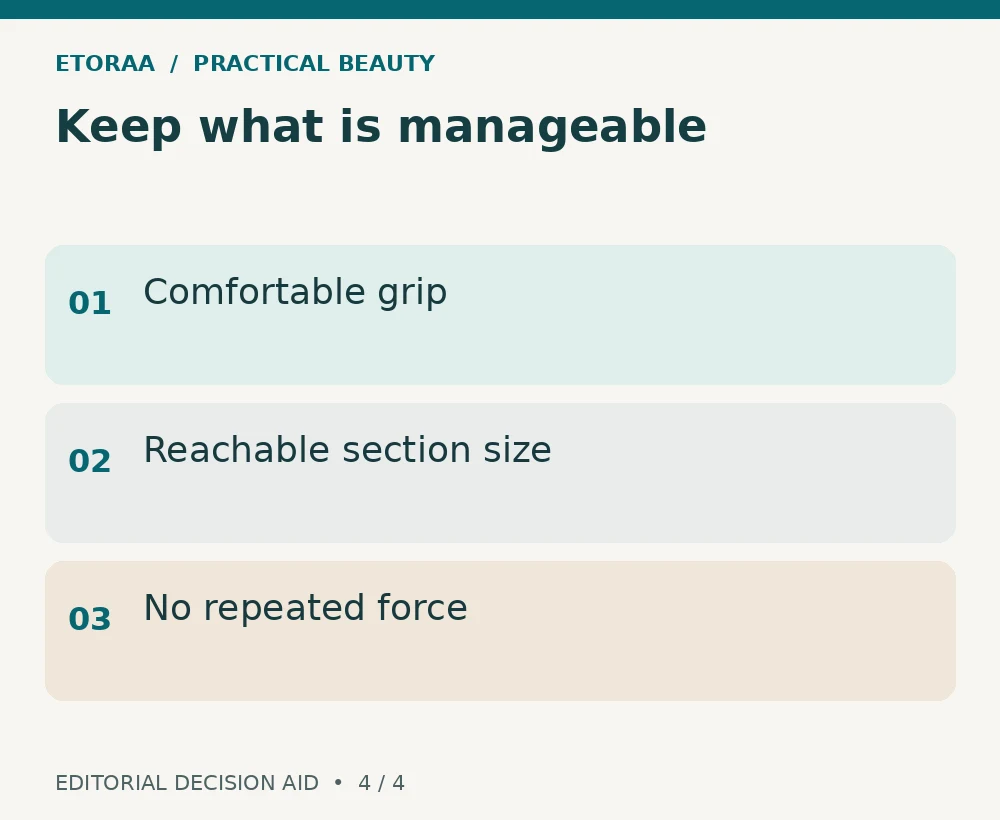
You can note whether the handle slips, the section is too large or the tool is hard to angle. Those are useful observations for your own routine. They are not measurements of breakage reduction. Our gentle detangling guide explains the wider method; this comparison helps you choose the contact and handling you prefer within that method.
Keep the decision focused
A brush may feel easier over a broad section, while a comb may give you more direct access to a small knot. You may use one or both, but there is no requirement to finish every session with several tools. Choose a method you can repeat without rushing or discomfort.
Clean and store the tool according to its construction. A wooden handle, vented head and solid plastic comb may have different care instructions. If you are dealing with severe matting, extensions or unexplained breakage, ask an experienced professional before trying a more forceful tool. Persistent scalp pain is a reason to stop, not a sign that the teeth are doing their job.
Wide tooth comb: frequently asked questions
Is a comb always gentler?
No category name guarantees a gentle result. Tool condition, section size and handling matter.
Can I use either tool with a dryer?
Only if its maker permits that use. Detangling and heat-styling tools can have different limits.
Should I count the hairs in the brush?
A casual count cannot diagnose hair loss or distinguish every shed hair from breakage. Seek advice for a persistent change.
Explore Etoraa’s beauty collection with a specific need and the product’s own directions in mind.
Sources and editorial scope
- AAD: healthy hair tips. Accessed 28 October 2026.
- Tangle Teezer: Wide Tooth Comb directions. Accessed 28 October 2026.
The selection checklists and routine examples are Etoraa editorial suggestions. Manufacturer directions apply to named products; they do not establish a category-wide result. No paid endorsement or first-hand product trial is claimed.