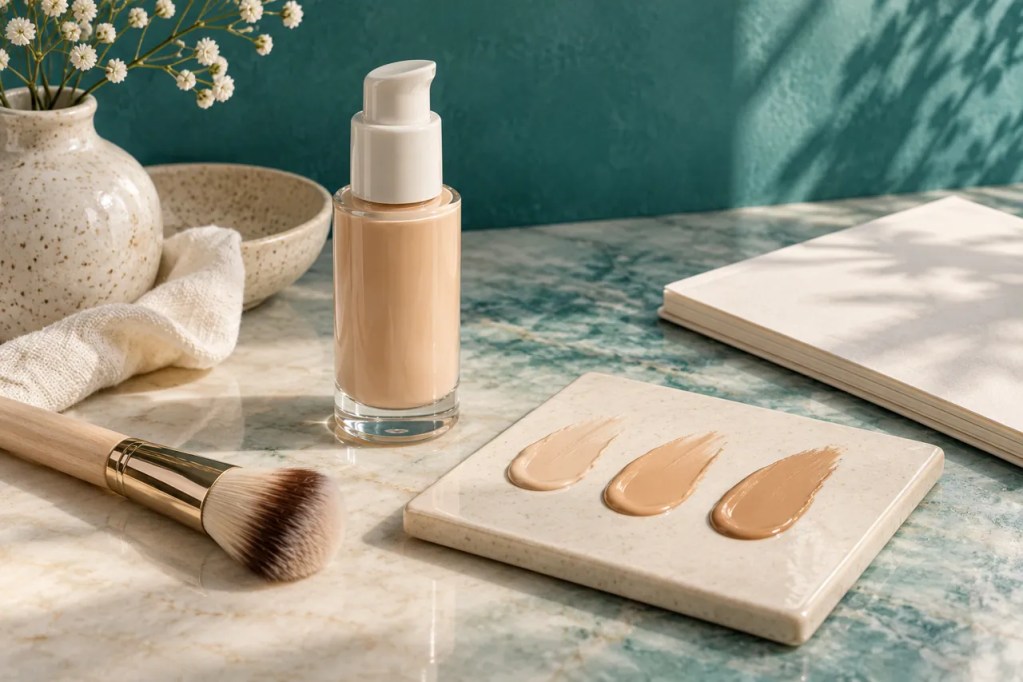
A foundation colour change can involve drying, the finished formula and the conditions in which you view or wear it. A darker or warmer appearance does not by itself prove chemical oxidation. Compare the settled shade in consistent light before changing products or buying a lighter colour.
By Etoraa editorial. This guide proposes an observation method, not a laboratory test or a foundation review.
Separate a visible change from its cause
Beauty discussions often use “oxidation” to describe any darkening. However, that word names a chemical process, not simply a look in the mirror. You cannot identify the mechanism from an orange cast alone.
Original research published online in 2022 studied commercial foundations and experimental formulas. It found that evaporation and pigment-coating choices could affect darkening under the study’s conditions. The research does not let you predict every finished product from a short ingredient-list rule. Read the study’s methods and findings.
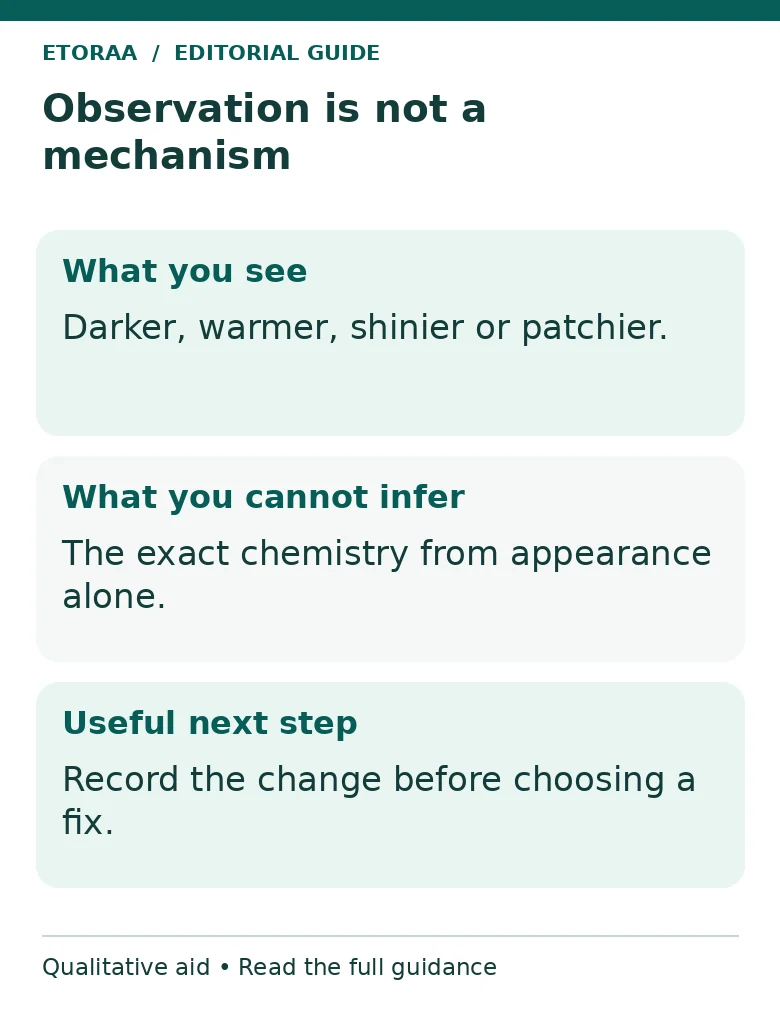
Therefore, describe your observation first: darker, warmer, patchier or more shiny. “It looks different after it sets” is a more careful starting point than “all iron oxides react with air on my face.” Similarly, a mineral label or shade undertone cannot tell you how much an individual foundation will change in your routine.
Check the light before changing the shade
Bathroom bulbs, shop lighting and daylight can give you different impressions. Compare your foundation in the same place and similar light when checking it over time. Do not use a filtered selfie as a colour reference; phone processing and exposure can also change the image.
For a purchase decision, assess the shade after it settles, alongside the areas you want it to match. That may include your jaw, neck or upper chest depending on the look and clothing. A hand swatch can show texture but does not automatically represent your face’s shade.
Write down whether the mismatch was visible immediately or developed later. This does not diagnose the chemistry. It simply stops you treating an initial shade mismatch and a later change as the same problem.

Make a short wear record
Choose a normal day, your familiar skincare and a known application tool. Use the product as directed and record the exact formula and shade. Next, note what you see once it has settled and again later when you would normally check your makeup.
Include the location of the change. For example, “centre looks deeper and shiny; outer cheeks still match” gives you a more specific next question than “the whole foundation is wrong.” Record your activity and conditions too, such as a warm commute or a quiet indoor morning.
Keep the exercise modest. You are gathering practical observations to choose a routine, not measuring colour with calibrated equipment. A photo may help your memory, but it does not turn the comparison into scientific data.

Change one optional variable
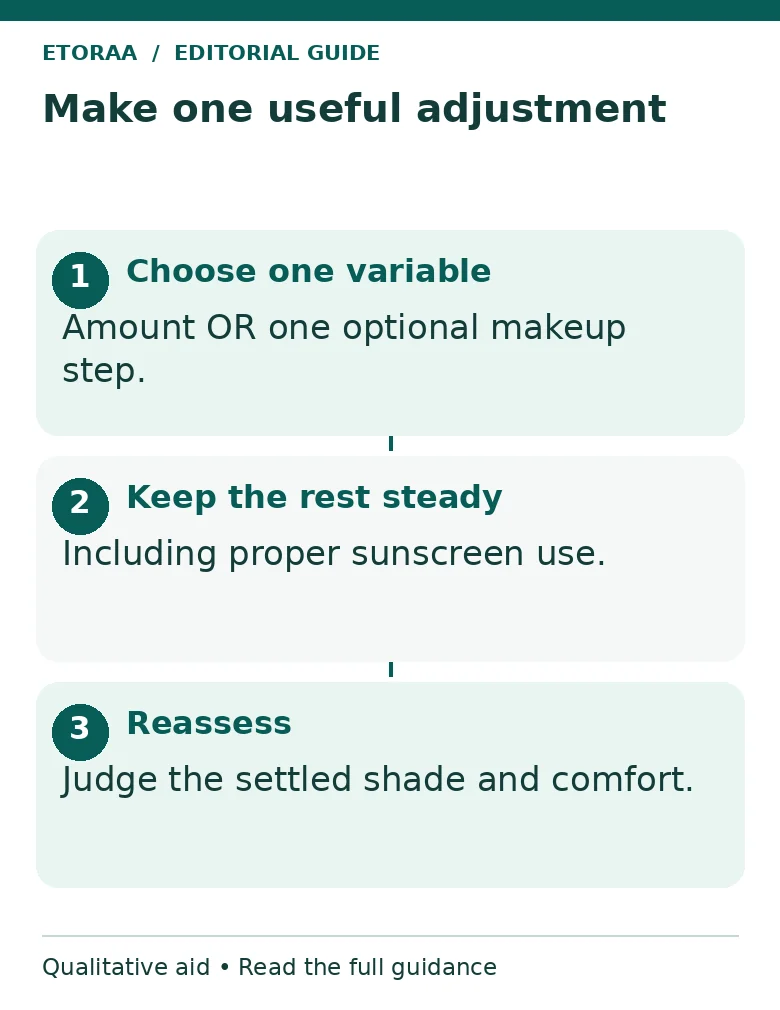
Once you know the pattern, choose one adjustment. You might compare a thinner foundation application with your usual amount, or try your normal powder only where shine bothers you. Keep other products steady so the comparison remains useful.
Do not reduce sunscreen below its labelled use to improve makeup. Also, avoid mixing untested additions into the foundation bottle. If the base feels over-layered, reconsider optional makeup steps while preserving the directions for skincare and protection.
Our blotting-paper-versus-powder guide explains two different touch-up approaches. Blotting removes some surface oil; powder adds another cosmetic layer. Neither proves or reverses a chemical mechanism.
Choose on the settled result
Do not automatically compensate by buying a much lighter foundation. That may create a mismatch at application and still fail to produce the finish you want later. Instead, compare suitable shades and formulas after settling, with the routine you expect to use.
If colour is only one part of the problem, consider your desired coverage too. Our skin-tint-versus-foundation comparison can help separate coverage preferences from a shade problem. There is no need to choose maximum coverage just because a formula offers it.
Frequently asked questions
Does colour change mean the product has expired?
Not automatically. Follow its opening-life and storage information. Unexpected changes in smell, texture or appearance inside the pack deserve a separate assessment; do not keep using a suspect cosmetic.
Can I identify the best formula from its first ingredient?
No. The finished formula and application matter. A single “water-based” or “silicone-based” label does not establish how it will look on you.
Will primer stop every foundation colour change?
No. Treat it as an optional product with a specific cosmetic job, not a guarantee against darkening.
Sources and scope
Original research: Research on the intrinsic mechanism of the darkening of liquid foundation, online 22 November 2022, accessed 30 October 2026. We use its limited findings without ranking formulas or extrapolating to all products. This is an evergreen guide. Illustrations and record templates are not experimental results.