
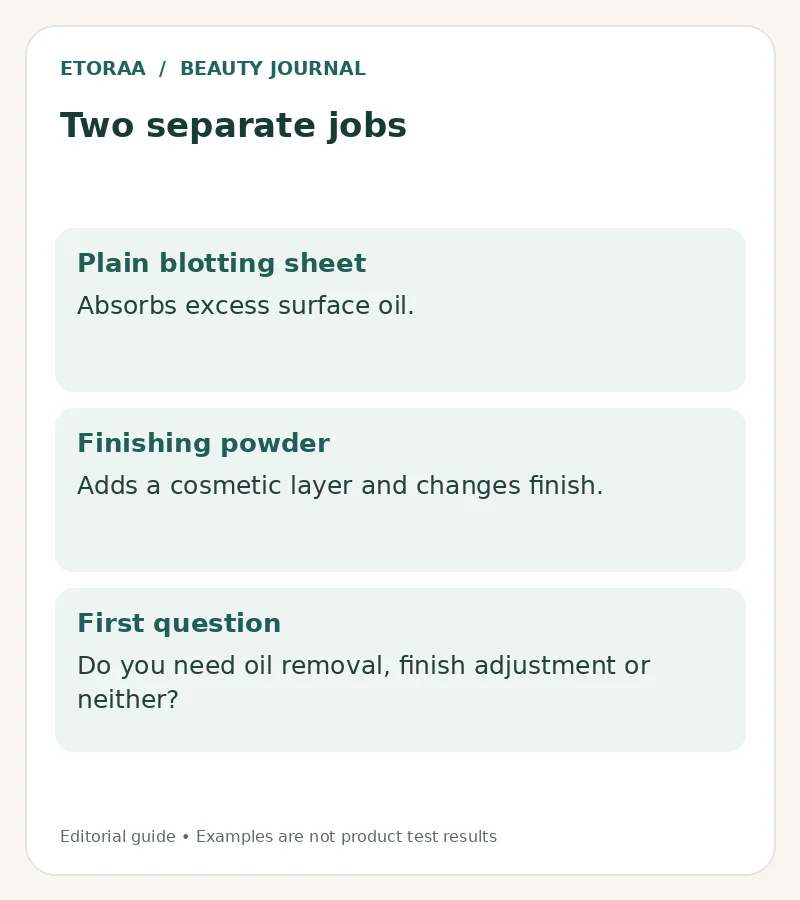
Blotting paper vs powder comes down to removing excess surface oil or adding a finishing product. Plain blotting sheets absorb oil without adding a powder layer. Powder changes the visible finish and may add coverage. Start with the specific shiny area, then decide whether it needs anything more. You do not have to use both.
Blotting paper vs powder: what each step does
Plain sheets and powder-coated sheets are not the same. Read the packet to see whether it adds pigment or powder. A translucent setting powder, tinted pressed powder and powder foundation also serve different purposes. The name of the format is only a starting point for choosing a touch-up.
If your base still looks even and only the nose is shiny, a small blot may be enough. If the finish needs a little smoothing, a suitable powder can help cosmetically. Neither option treats the cause of persistent skin symptoms. Shine is a normal appearance concern, not a reason to scrub skin until it feels tight.
Press gently, then look again
Use clean hands and a fresh sheet. Place it on the area you want to blot, press gently and lift. Avoid rubbing across the face or dragging foundation into a different area. The American Academy of Dermatology’s oily-skin guidance specifically recommends pressing blotting paper rather than rubbing it.
Next, examine the result in ordinary light. Do not assume you must remove every trace of reflection. If makeup moved, repeatedly blotting the same place can make the unevenness more obvious. Stop and reassess the base rather than cycling between sheets and powder with no clear goal.

Add powder only where the finish needs it
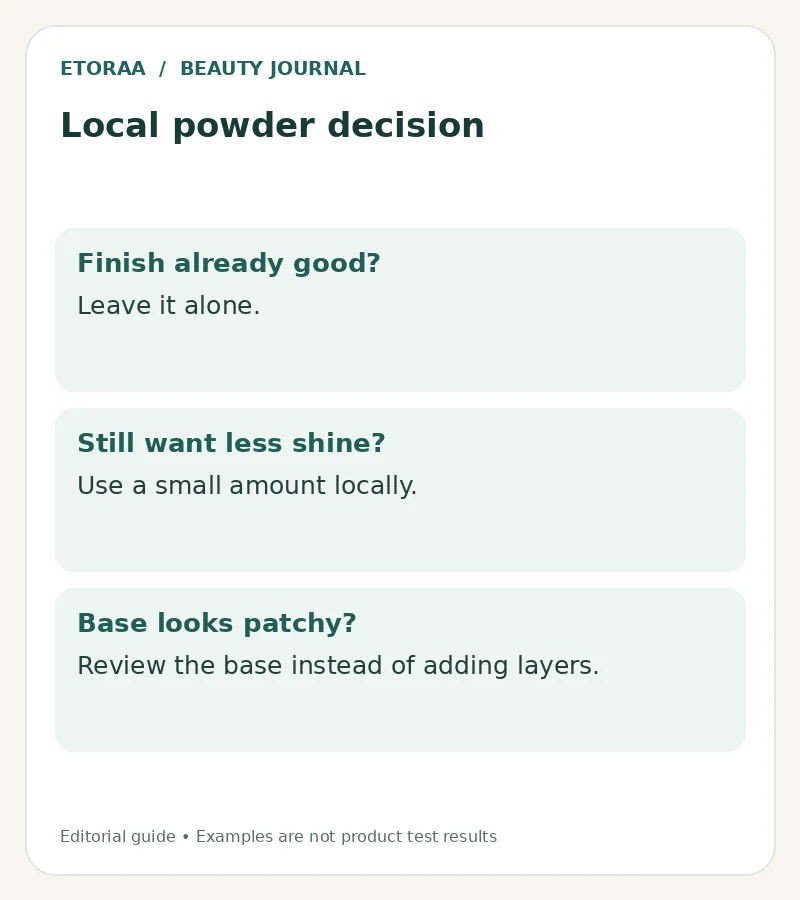
Use a clean applicator and a small amount according to the formula. Work locally, then check before adding more. A shade that looks invisible in one room may look pale or warm in another. Review the result in daylight and in the lighting where you will actually wear it.
An already thick or flaky base rarely becomes more comfortable through repeated powder layers. Leave dry areas alone and review your morning application next time. Also keep sun protection separate: a light cosmetic dusting is not a reliable way to assume you have applied the labelled sunscreen amount.
Build a touch-up plan around the problem
For example, someone with a shiny forehead and comfortable cheeks can blot only the forehead. If they still want a softer finish, they can apply a little familiar powder there. A second person with patchy foundation may need to correct the base instead. The same product combination does not solve these two situations.
Keep the sheet packet closed and your powder applicator clean. Do not put a used sheet back into the packet. If touch-ups become frequent and uncomfortable, simplify the products you are layering and seek suitable advice for persistent skin concerns. More mattifying steps are not automatically a better routine.

Common questions
Do I need powder after blotting?
Only if you want a different finish afterward. Check the result first.
Can blotting replace cleansing?
No. It is a local cosmetic touch-up, not a replacement for a suitable cleansing routine.
Build your next step
For a related practical guide, read Powder Puff vs Brush: Choose Placement, Finish and a Clean Routine. Explore Etoraa when you are ready to compare available beauty and self-care products. Check each listing for its actual ingredients, dimensions and care directions.
Troubleshoot the visible problem first
Look at the specific area before adding a product. Shine, a visible foundation edge and patchy colour are different observations. A finishing powder may change the surface finish, but it cannot automatically correct every shade or blending issue. Try one small adjustment, then step back to ordinary viewing distance. This keeps a quick touch-up from turning into repeated layers over the whole face.
| Situation | Practical check |
|---|---|
| Surface shine | Try a gentle blot and reassess before adding powder. |
| A visible shade boundary | Check the blend and lighting before adding more coverage. |
| A heavy-looking finish | Pause additional layers and review the original application. |
The makeup lighting guide helps separate a shadow from a patch you may want to blend. Blotting or powder is not a replacement for sunscreen reapplication.
Sources and editorial context
AAD: controlling oily skin · Clean & Clear: plain oil-absorbing sheets · My Women Stuff: reader questions about plain and powdered sheets
Prepared by Etoraa editorial. This guide explains shopping and routine choices using the sources above and original illustrative examples. It does not claim hands-on product testing or clinical review. Sources checked on 27 October 2026. The featured image is an illustrative composition, not a photograph documenting a product test.