
Skin streaming means simplifying your skincare routine so each product has a clear job. The useful question is not “How few products can I own?” but “Which steps do I actually need and enjoy using?” You can start with a shelf audit before spending anything.
By Etoraa editorial. Reviewed 4 November 2026. General cosmetic and personal-care guidance; no product testing or medical review is claimed. Featured artwork is an AI-generated editorial illustration.
LOOKFANTASTIC’s skin-streaming explainer describes a move toward fewer, purposeful steps and retains sun care as an essential. Its inclusion in the A/W 2026 trend report provides autumn retail context, although a retailer trend is not a medical treatment plan.
Separate the goal from the shopping list
Start by writing one main priority in ordinary language. Examples include “I want a routine I finish before work” or “I want fewer products sitting unused.” A clear priority lets you assess choices without needing a long ingredient wish list.
Then name the practical roles in your routine: cleansing, moisturizing, daytime sun protection and any specific treatment you already use. The AAD’s moisturiser guidance explains that formulas and individual needs differ. If you follow prescribed care, keep those instructions in place and ask your clinician before changing that part of the routine.
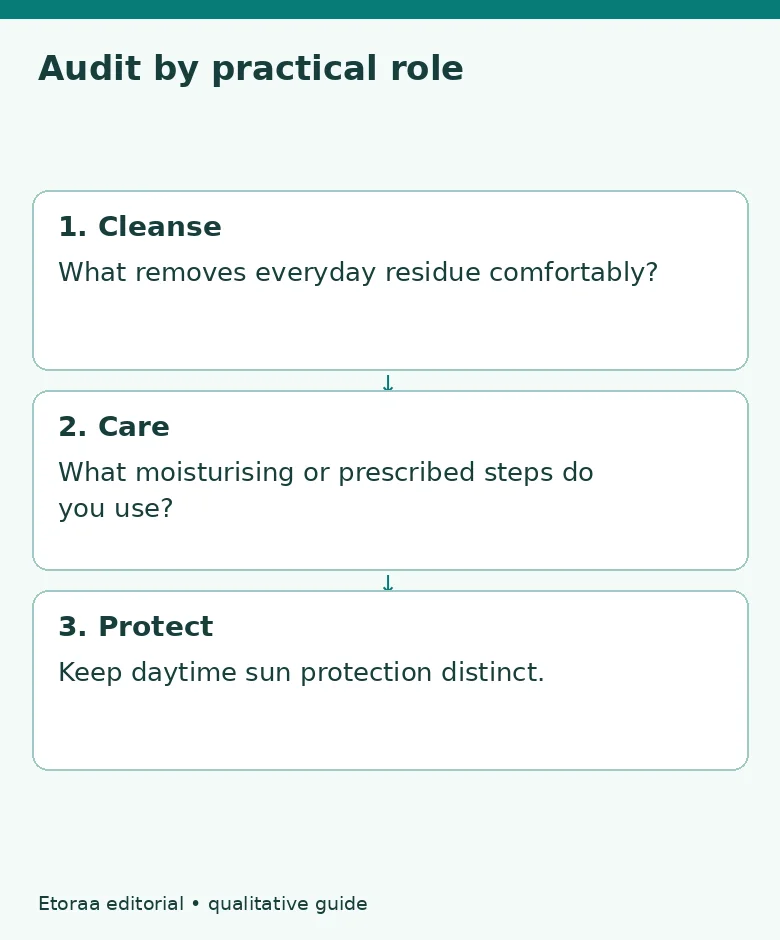
Use a five-column shelf audit
Set aside a few minutes and record what you already own. You do not need an app; a note on your phone works well.
| Product | Why I use it | When I use it | Another product doing this job? | Keep or reconsider? |
|---|---|---|---|---|
| Cleanser | Remove daily residue | Evening | Check any second cleanser | Decide from actual use |
| Moisturizer | Comfortable daily finish | As directed | Compare overlapping creams | Keep the preferred texture |
| Serum | One named concern | As directed | Check similar treatments | Clarify the purpose |
The entries are examples, not a personalized prescription. The aim is to identify repetition, unused purchases and steps you cannot explain. Two products can have different names while filling a very similar role in your day.
Remove friction before removing products
A routine may feel complicated because products are scattered across several drawers, because you cannot remember the instructions, or because one texture takes too much effort to work around. Solve these practical problems first.
Keep the products you currently use together. Store packaging or a photograph of the directions where you can find it. Put occasional items elsewhere so they do not make the everyday routine look longer than it is. Check the manufacturer’s storage instructions rather than displaying everything in direct sunlight for aesthetic reasons.
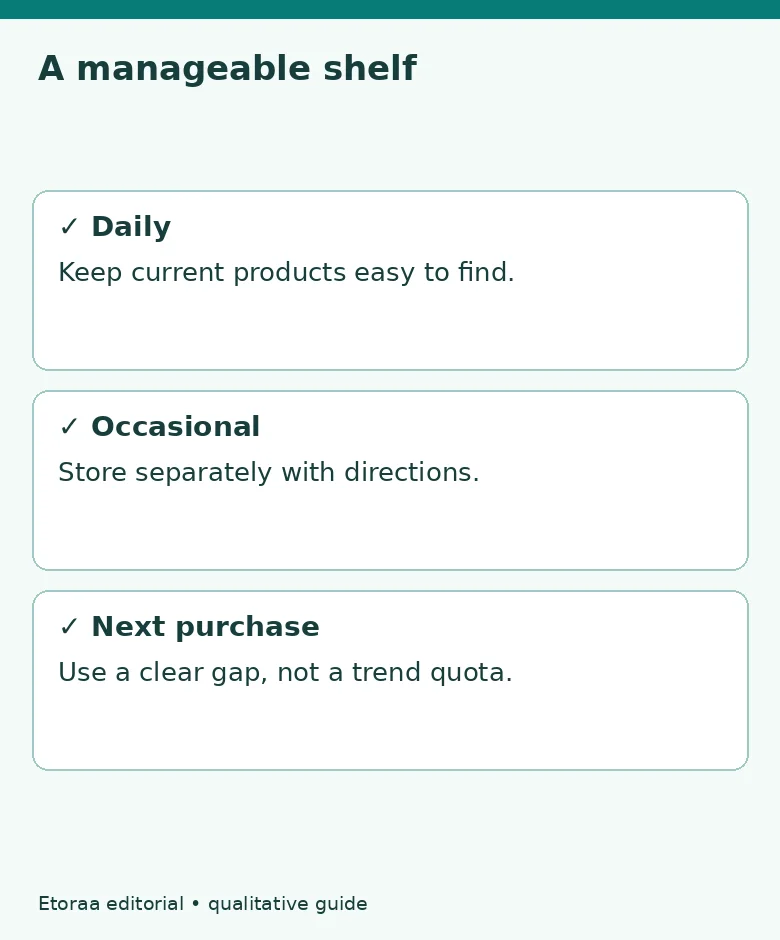
Try a replacement rule
Before buying something new, ask which existing role it will fill. Will it replace an item you dislike, or add an entirely new step? If it adds a step, describe what would make that addition worthwhile to you.
For example, if you already enjoy your moisturizer, a second moisturizer needs a specific reason to be useful. If your cleanser is almost empty and inconvenient to use, researching a replacement is a more focused task. This is a budgeting method, not a promise of better skin from owning fewer bottles.
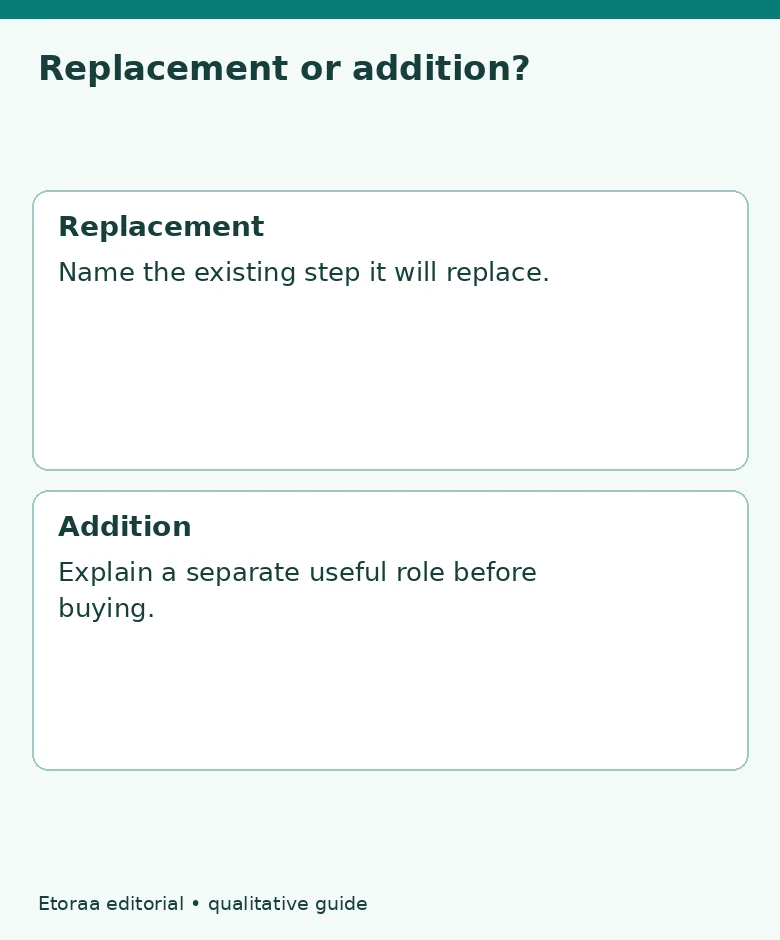
Build a routine you can explain
A simple routine is easy to describe to another person: what each product is, when you use it and why you chose it. Keep the original directions with each item. Products marketed for several uses still need to be appropriate for the areas and purposes specified on their labels.
Skin streaming should leave room for preference. Someone who enjoys a longer evening ritual may reasonably keep it. Someone who travels frequently may value compact packaging. Your ideal number of products depends on your needs, not a social-media challenge.
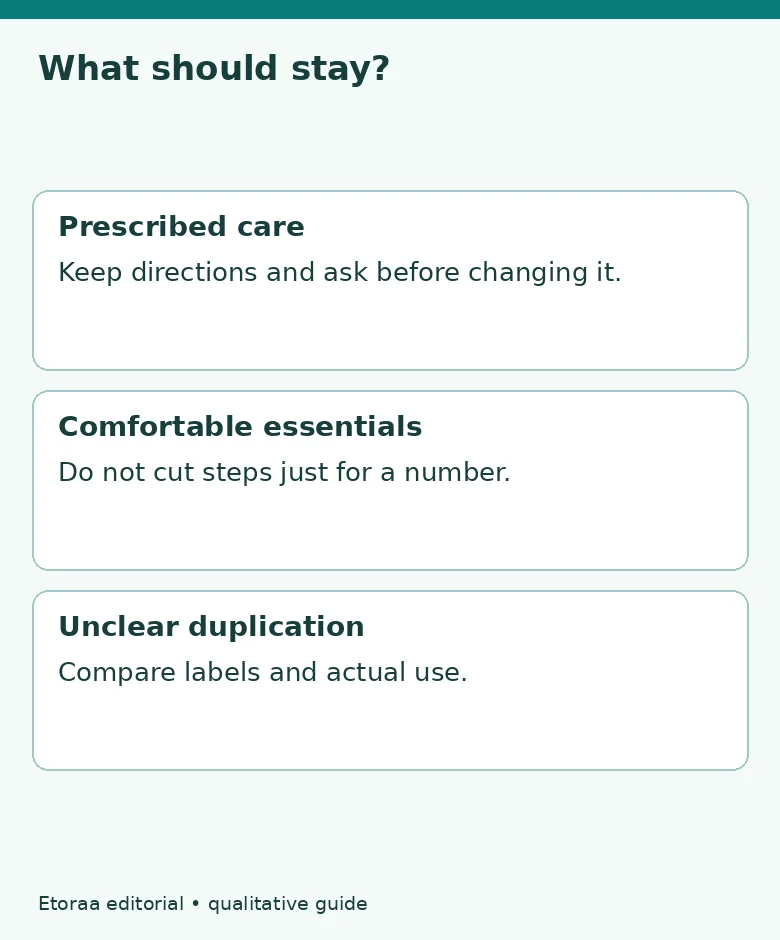
Turn a skin streaming audit into one decision
Imagine you own two moisturisers and an optional hydration serum. Write down when each is used and why. Similar ingredients may prompt a closer look, but they do not prove the complete products are interchangeable.
You may prefer different textures at different times, or find one bottle unnecessary. Choose one practical change instead of cutting every product at once. Keep prescribed care in place and ask your clinician before changing it.
Our moisturiser ingredient guide helps explain roles without ranking ingredients. A simpler shelf is an organisational goal, not evidence of improved skin. Keep the number flexible and review what you repurchase rather than discarding usable products for a photograph.
Frequently asked questions
Is skin streaming the same as skin cycling?
They address different decisions. Streaming concerns the number and purpose of steps; cycling describes changing the routine on different days. A schedule alone does not tell you whether a product is appropriate.
Can I finish products I already own?
You do not need to discard usable products simply to achieve a minimalist look. Follow their directions and storage information, and reconsider what you repurchase.
What is the best first purchase?
Sources and further reading
- LOOKFANTASTIC: What is Skin Streaming?. Not displayed in the retrieved article; search index described it as approximately two months old. Accessed 18 October 2026.
- LOOKFANTASTIC A/W 2026 Trend Report. A/W 2026; exact publication date not displayed. Accessed 18 October 2026.
Sources checked for this update
- AAD: How to pick the right moisturizer — updated 25 January 2022; accessed 4 November 2026.