To file natural nails, use a suitable fine file to smooth the free edge with light strokes in one direction. Keep the shape practical, check often and leave the cuticle alone. Filing should refine an edge, not thin the nail surface or force a painful nail into a chosen shape.
By Etoraa editorial. Researched 5 November 2026. Editorial guidance; no personal product testing or medical review is claimed.
Before you file natural nails, choose the task
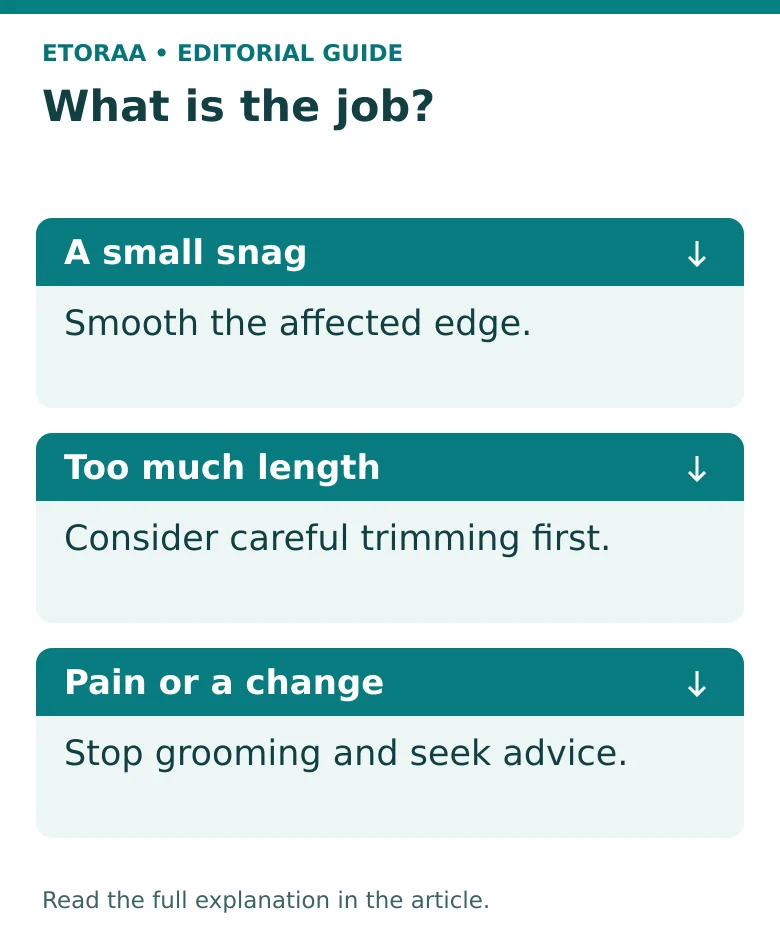
Decide whether you need to shorten length, smooth a snag or adjust the outline. For substantial length, careful trimming may be easier than repeated filing. The AAD recommends trimming fingernails almost straight across, then slightly rounding corners with a file.
Gather clean tools and a well-lit place to sit. Check the file’s purpose, especially if it came in a kit designed for artificial nails. Our nail-file grit guide explains the tool-selection question. You do not need a powerful electric file or an elaborate manicure kit to smooth a small rough edge at home.
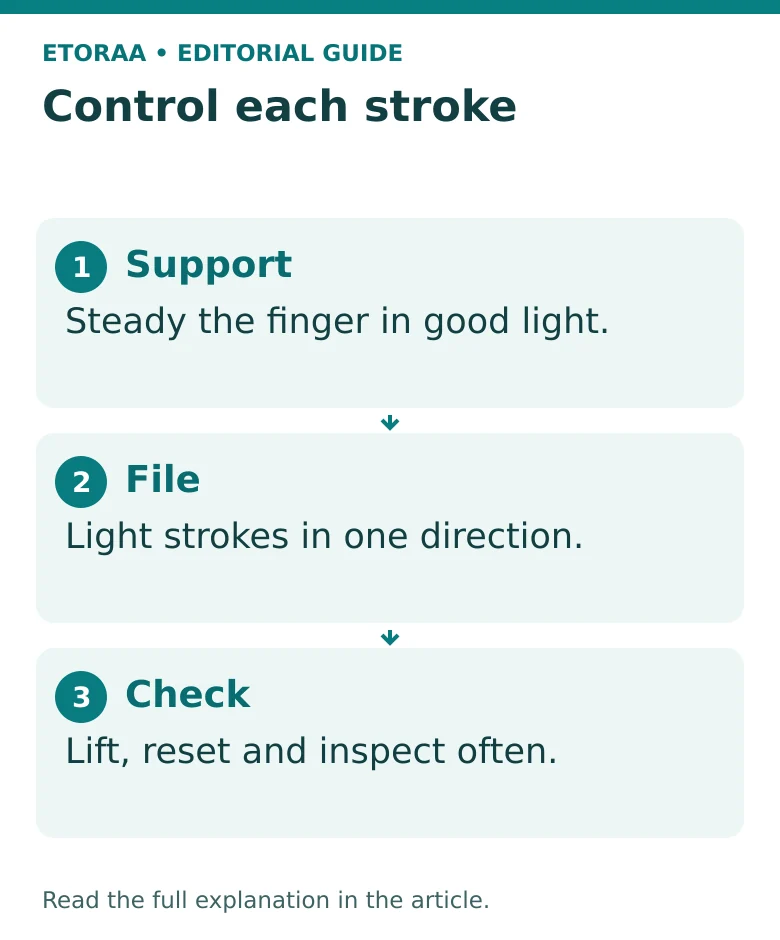
File natural nails with light strokes at the edge
Support the finger and use controlled strokes along the edge. The AAD advises filing in the same direction instead of sawing back and forth. Lift and reset the file between strokes. Stop frequently to look at the shape rather than removing a large amount before checking.
Work only on nail that extends beyond the fingertip. Avoid digging into sidewalls or the skin. If a rough corner catches clothing, aim to smooth that corner; you do not have to shorten every nail to match immediately. Pain is a reason to stop, not a sign to push through. A file cannot safely remove the cause of every tender or damaged nail.
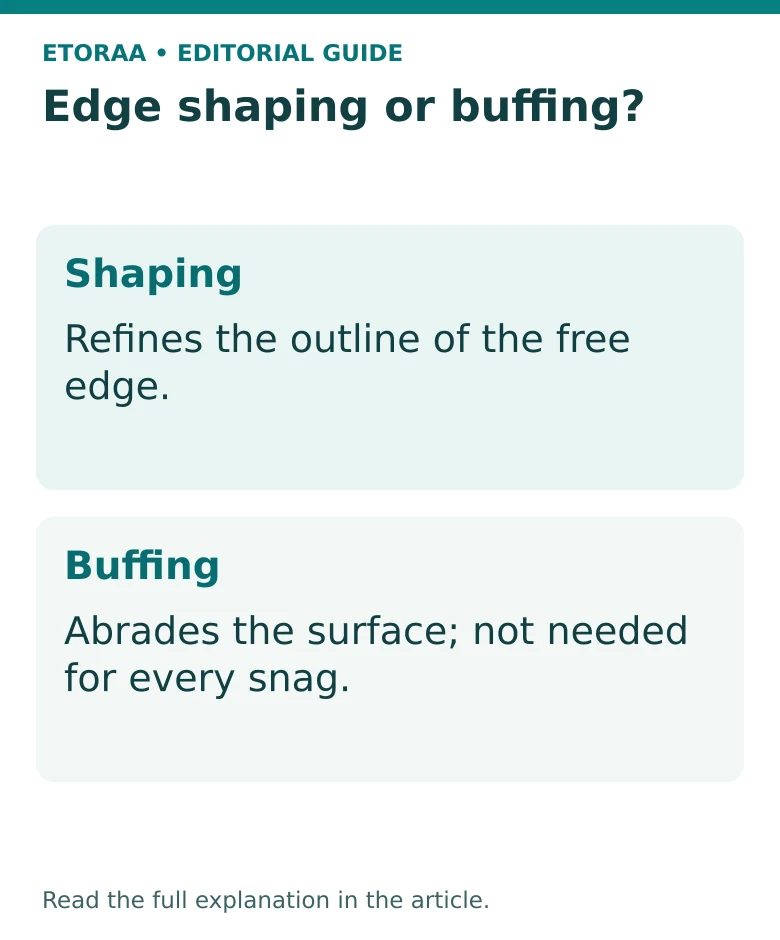
Keep shape and surface buffing separate
Shaping changes the outline. Buffing abrades the surface. A rough edge does not mean the whole nail needs polishing with several abrasive steps. Do not repeatedly buff a thin or peeling nail in pursuit of a glossy finish.
For example, compare a short rounded-square shape with a long pointed one for your actual day. If you type, fasten small buttons or handle tools, a practical shorter edge may be easier to maintain. You do not need an extreme shape to look neat. There is no universally best outline for every nail, and a photograph does not show how a shape will feel during your routine.
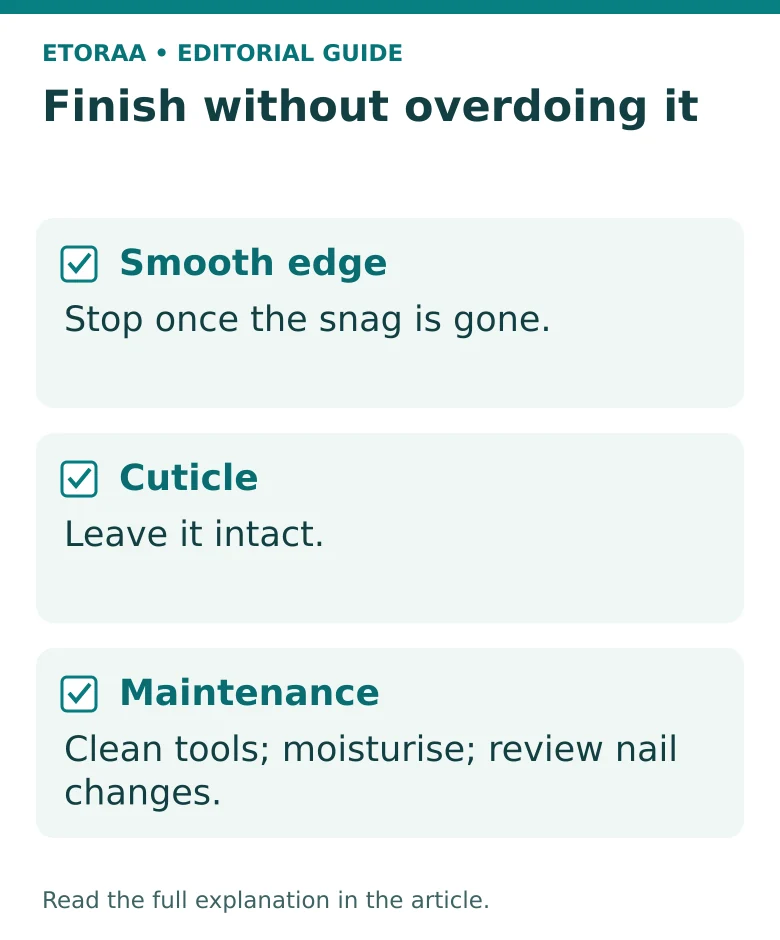
A useful reason to file natural nails is a corner that catches on a jumper at one corner. Inspect the free edge in good light, then use a few light strokes only where the snag is. Recheck before continuing. Once the edge is smooth, stop rather than reshaping the whole nail out of habit. If the snag comes from a deeper split, avoid prying the layers apart or filing down into attached nail. Keep the area protected and get advice if it is painful or recurring. The goal of home filing is a manageable edge, not removing every visible imperfection.
Finish, inspect and stop at a smooth edge
Check the edge gently for remaining snags and remove only what is needed. Then clear away nail dust and use your usual hand moisturiser. The AAD’s healthy-nail advice supports keeping nails clean, avoiding use as tools and protecting them from excessive water exposure. It also advises leaving cuticles intact.
Make a simple maintenance plan: keep a suitable file accessible for a small snag, rather than waiting until you want to bite it off. Follow the file maker’s cleaning instructions and replace worn disposable boards when needed. Do not share a personal file casually. If a nail changes colour or shape, becomes swollen or painful, or repeatedly splits, seek medical advice. Home grooming should not become an attempt to diagnose or file away a nail problem.
Frequently asked questions
Should I file wet nails?
For controlled shaping, let nails dry after washing. The AAD discusses softening before clipping; that does not require filing soft wet nails. Do not force a file through bending nail.
Can filing make nails grow faster?
This guide is about grooming the existing edge. It does not establish faster growth. A smooth practical edge may be easier to maintain, but that is different from changing growth.
Sources and update notes
- AAD: trimming and filing. Date not displayed. Accessed 5 November 2026.
- AAD: healthy nails. Date not displayed. Accessed 5 November 2026.
Featured image: AI-generated editorial illustration; generic props, not a product photograph or test. Body graphics are original editorial decision aids, not measured product results.